I’ve discovered that decorating your bedroom starts with function, not looks. Choose a style—like Japandi or farmhouse—to guide everything from your headboard to throw pillows. Then scale your furniture: an 8×10 rug works well with a queen bed. Invest in a quality mattress ($800–$2,000) and premium linens ($150–$400), then layer multiple light sources for mood control. Add texture through pillows and blankets in creams and grays. Finally, display meaningful items on nightstands to personalize the space. Each technique builds on the last.
Start With Bedroom Function Over Aesthetics
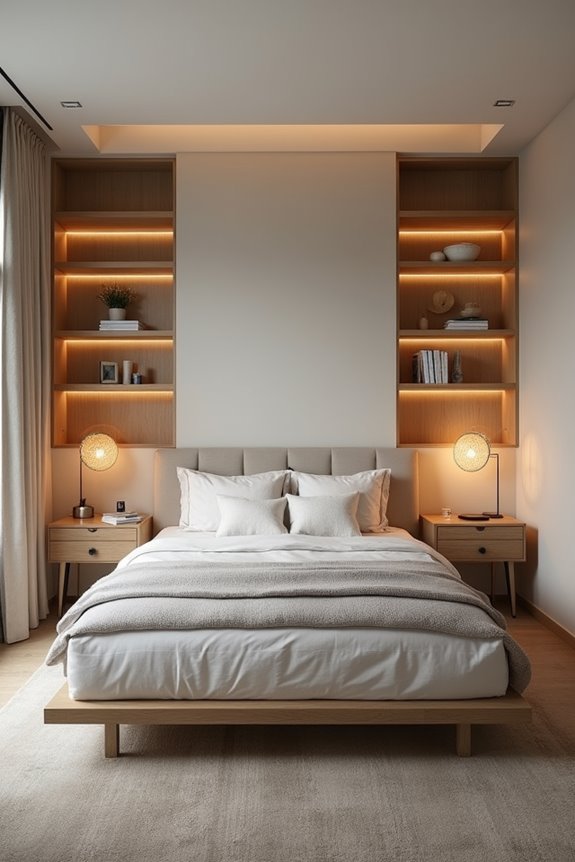
Why do so many beautiful bedrooms feel uncomfortable to actually live in? I’ve learned that aesthetics matter far less than function. Before choosing a single decorative piece, I define my bedroom’s primary purpose—is it sleep-focused, a lounging retreat, or storage-heavy?
This clarity shapes everything. I start by positioning my bed with accessible access on all sides, then add practical furniture like a storage bed or nightstands with drawers. This approach keeps surfaces clutter-free naturally.
Layout comes next. I arrange furniture to support easy movement, avoiding cramped arrangements that make me feel trapped. Finally, I layer my lighting strategically—ambient light for unwinding, task lighting for reading, accent lights for mood.
When function guides my choices, the room becomes genuinely livable. Beauty follows naturally from spaces designed for how I actually live.
Choose a Bedroom Style That Frames Everything
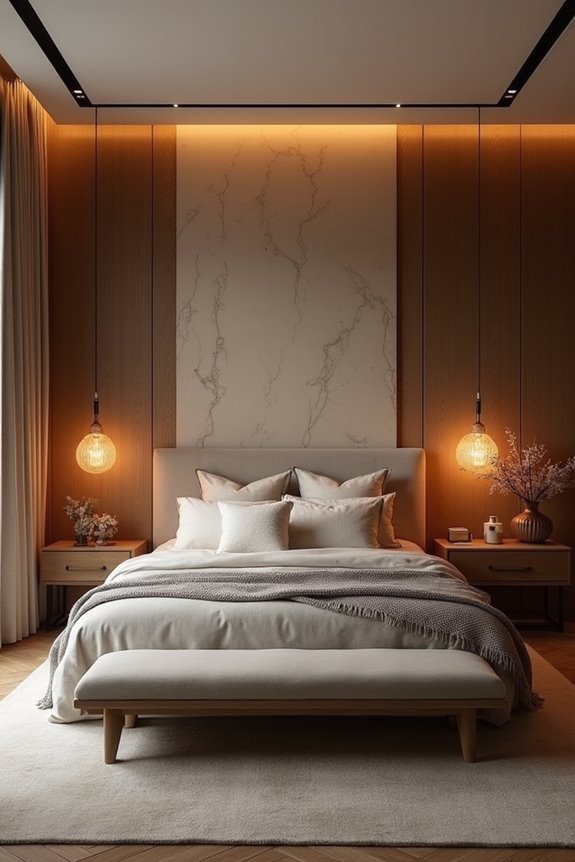
Once you’ve nailed down how your bedroom actually needs to function, it’s time to choose a style that’ll guide every decision moving forward—from your headboard to your throw pillows. Your bedroom style acts as the foundation for everything else. Think of it as creating a personal sanctuary that reflects who you are.
Each style—whether Japandi’s calm minimalism, industrial’s moody cocoon, or farmhouse’s warm authenticity—shapes your color palette, bed frame choice, and lighting selections. When you commit to a direction, decor layering becomes intuitive. You’ll know which textures belong, how to position your focal point, and which pieces create cohesion.
This framework takes the guesswork out of decorating. You’re not randomly collecting items; you’re building a bedroom where every element serves both function and beauty.
Apply Your Style to Layout, Lighting, and Proportions
Now that you’ve picked your style, it’s time to bring it to life in your actual space—and that’s where layout, lighting, and proportions enter the picture. Start by arranging your bed, nightstands, and seating to create balance and easy movement through the room. This foundation shapes your mood immediately.
Layout, lighting, and proportions transform your chosen style into reality, shaping mood through thoughtful arrangement and balance.
Next, layer your lighting with ambient, task, and accent options using dimmers. Soft, adjustable light enhances textures and supports your chosen aesthetic well.
Scale matters. Your bed, nightstands, and other pieces should relate visually to your room’s size and each other—nothing too large or cramped.
Finally, use symmetry or intentional variation with matching or eclectic pairs. Align your textiles, patterns, and colors across bedding, rugs, and curtains within a unified palette. These proportions and details create a room that works well and shows who you are.
Scale Your Furniture and Rugs to Your Room
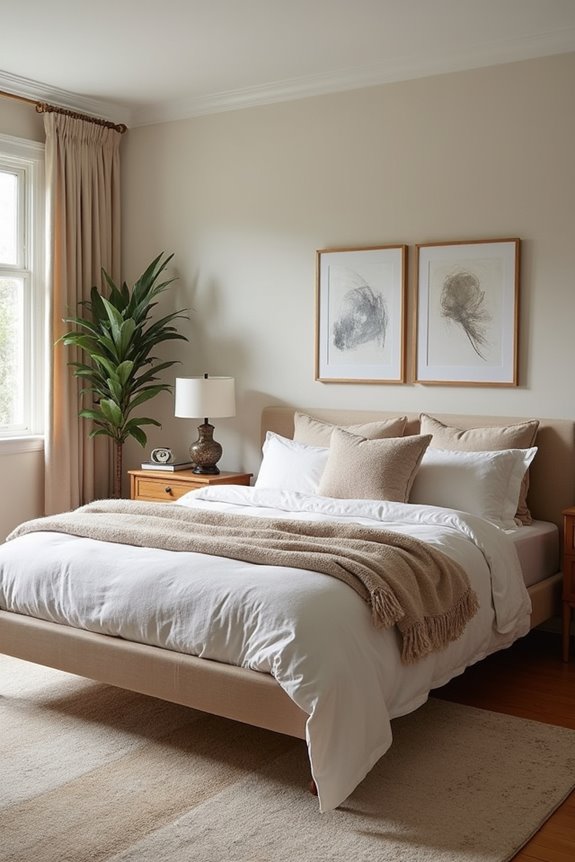
How do you know if that gorgeous 9×12 rug will actually work in your bedroom? Start by anchoring your bed area with the right rug sizes. For a queen bed, choose 8×10; for a king, go 9×12. This bedroom furniture scaling means your rug extends beyond the bed’s sides, creating balanced room proportion.
Next, consider your bench at the foot of the bed—it should measure about three-quarters your bed’s length. This proportional layout prevents overcrowding.
Nightstands matter too. Match them to your bed’s visual heft so they don’t disappear or dominate. When furniture sizing feels right, your bedroom becomes welcoming and yours. These decisions turn oversized rugs and random pieces into a cohesive, comfortable space where everything belongs together.
Invest in Sleep First: Where to Splurge and Save
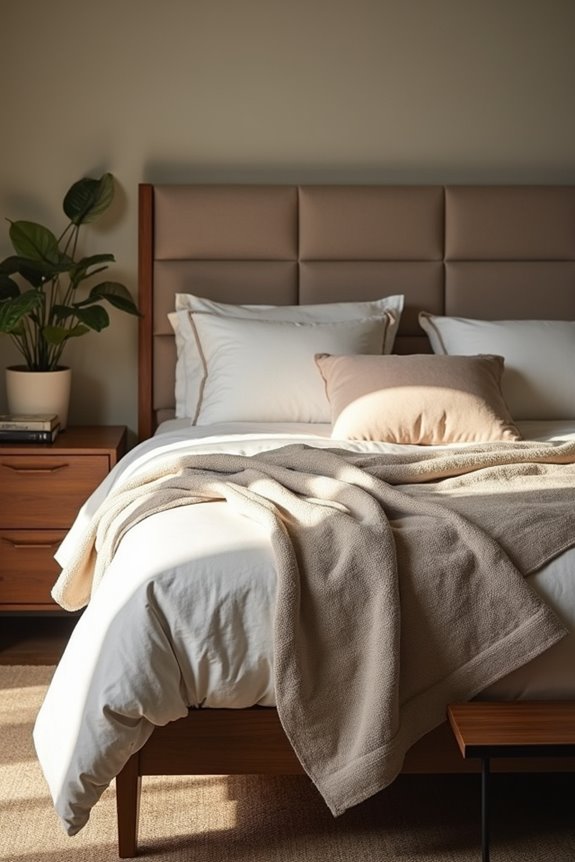
Your bedroom’s real magic happens where your head hits the pillow each night, so I’d rather see you invest in a quality mattress and percale or linen sheets than spread that budget thin across every decor piece. You’ll notice the difference right away—better sleep means better days—while strategically saving on nightstands, rugs, headboards, and art keeps your wallet happy without sacrificing comfort. This approach means you’re building a bedroom that actually serves you, not just looks good in photos.
Mattress and Bedding Quality
When it comes to bedroom investments, the mattress and bedding you choose matter more than you might think—they’re the foundation of everything else you’ll do in this space. I’ve learned that skipping quality here means sacrificing sleep comfort and support every single night.
| Investment Area | Why It Matters | Budget Range |
|---|---|---|
| Mattress Quality | Provides spinal support, durability | $800–$2,000 |
| Bed Linens | Soft, durable fabrics enhance rest | $150–$400 |
| Window Treatments | Controls light, improves sleep | $200–$600 |
A good mattress lasts 7–10 years with proper nightly use. High-quality bed linens in cotton or linen resist pilling and maintain comfort through countless washings. These aren’t splurges—they’re necessities. When you prioritize mattress quality and durable fabrics, you’re investing in yourself, creating a space where genuine rest happens.
Strategic Budget Allocation
Most bedroom budgets work best when you prioritize what touches your body every single night. I’d splurge on a quality mattress and premium bed linens—they’re your sleep foundation. These items directly impact your rest and long-term health, making them worthwhile investments.
Custom window treatments deserve your attention too. Controlling light and privacy improves your sleep comfort substantially. Consider blackout curtains or cellular shades for better darkness.
Now, here’s where you save smartly: skip expensive headboards, nightstands, and rugs initially. These elements update easily later without major regret. Minimize spending on lighting fixtures and decor accessories—they’re nice but optional.
This strategic budget allocation lets you invest in what genuinely matters: restful nights and daily wellness. You’ll appreciate this approach immediately.
Accessory and Decor Economy
Now that you’ve locked in your sleep foundation with a quality mattress and premium linens, it’s time to talk about the accessories and decor that’ll round out your bedroom while keeping costs reasonable.
I’m talking layered textiles—throw pillows, blankets, and accent pillows that stack texture and pattern at lower price points. Budget decor like wall art and nightstands let you express style without overspending. Here’s where I save: rugs, headboards, and basic lamps work just fine at lower prices.
Lighting layering matters though. I invest in quality window treatments for privacy and light control, then add budget bedside lamps for flexibility. This approach lets your bedroom feel planned and layered, not bare. You’re creating genuine comfort through smart choices, which honestly feels better than spending heavily on everything.
Layer Lighting and Texture for Visual Depth
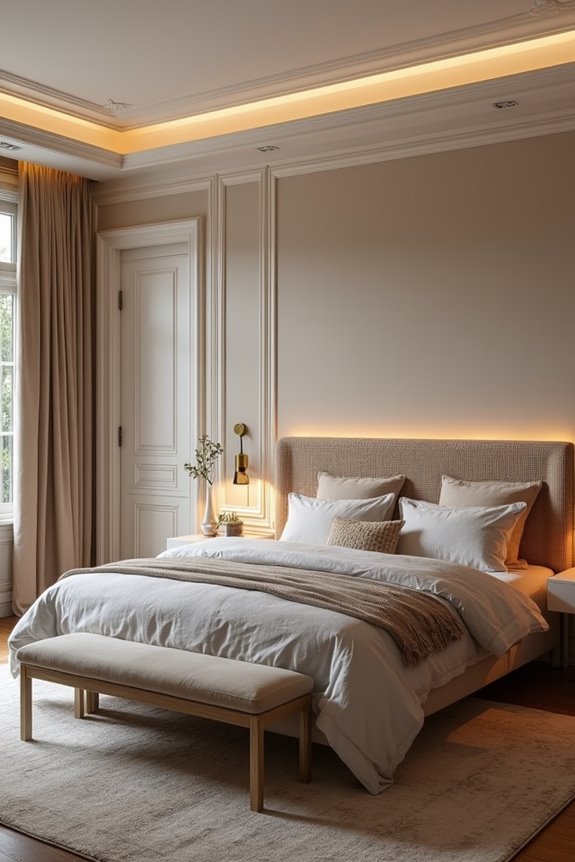
I’ve discovered that layering multiple light sources—overhead fixtures with dimmers, bedside lamps scaled to your nightstand proportions, and accent lights above artwork—creates visual depth in your bedroom. When you combine these lighting layers with textured textiles and layered bedding, shadows naturally dance across surfaces, adding dimension to the room. The effect works best when you adjust your dimmer gradually through the evening, letting that ambient glow settle into the space and match your mood.
Multiple Light Sources Strategy
How’d you like to create a bedroom that feels inviting at any hour? I’ve found that combining multiple light sources—ambient lighting for overall glow, task lighting for reading, and accent pieces for visual interest—creates the warmth most people want. Start with bedside lamps scaled to about one-third your nightstand’s surface. Add a floor lamp or wall sconces alongside overhead fixtures. This layered lighting approach gives you flexibility and depth that a single source simply can’t deliver. Install dimmers on overhead and accent lighting to adjust mood throughout your evening. Coordinate lamp finishes and shades in whites and neutrals for visual cohesion. When you control your bedroom lighting strategically, you’re controlling how the space makes you feel—and that matters.
Texture Combinations For Depth
What makes a bedroom feel dimensional rather than flat? Textile layering. Combining different fabrics creates the visual depth a room needs.
Start with a quality cotton base sheet, then add a cloudlike comforter. Layer a nubby throw across the foot—this texture contrast catches light differently than smooth fabric. Pile on throws and pillows in varying scales: small patterned cushions, medium throws, and a solid headboard. Each piece matters.
Keep your neutral palette cohesive. Creams, grays, and whites let the tactile textiles shine without overwhelming the eye. Add strategic color pops through pillows or throws.
This layered bedding approach, paired with lighting depth from bedside lamps and overhead dimmable lights, makes your bed an inviting centerpiece. You’re not just decorating—you’re creating a sanctuary.
Ambient Glow And Balance
You’ve built your textured bed into a focal point, but lighting makes the real difference: layered lighting that works with those gorgeous fabrics instead of against them.
Start with a dimmer on your overhead fixture so you control the brightness. Then add bedside lighting on each nightstand for reading without harsh glare. A floor lamp in the corner creates depth, while wall lamps near your headboard provide light and softness.
Choose varied heights—mix a table lamp with a floor lamp rather than matching pairs. This creates visual interest that feels deliberate, not sterile. Warm-toned shades work with your textiles, deepening that ambient glow. Your bedroom becomes a place where everything feels balanced and inviting.
Add Personal Touches That Make It Yours
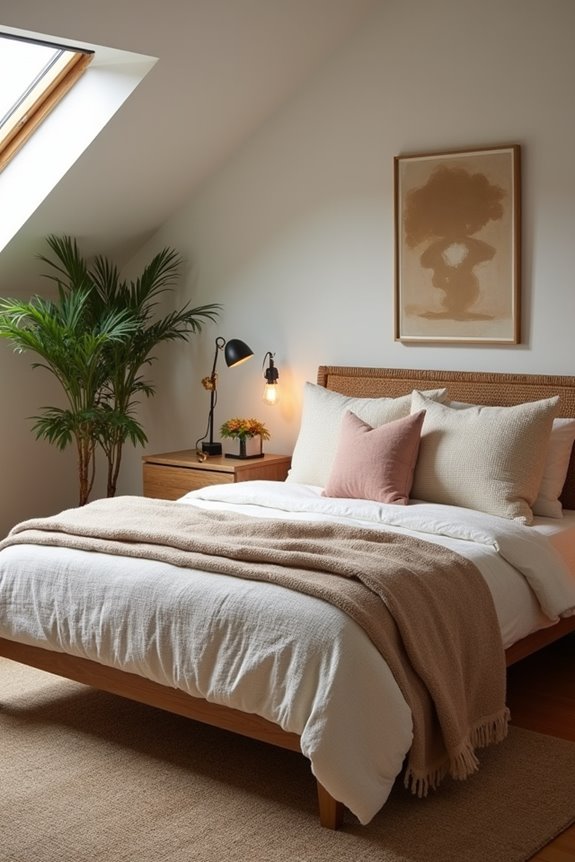
The pieces you choose for your bedroom tell the story of who you are—and that is what makes a beautiful room feel like your own. I display family heirlooms and personal accessories on nightstands, anchored by cohesive gold frames that create visual harmony. A Frame TV mounted above my dresser blends technology with framed artwork, becoming décor rather than an eyesore. At my bedside, I keep lavender linen spray within arm’s reach—a small ritual that grounds me each night. A wooden bench positioned at my bed’s foot holds quilts passed down through generations. These meaningful objects, thoughtfully arranged and properly scaled, turn sterile walls into a deeply personal sanctuary. Your bedroom should reflect who you actually are, not magazine perfection.