
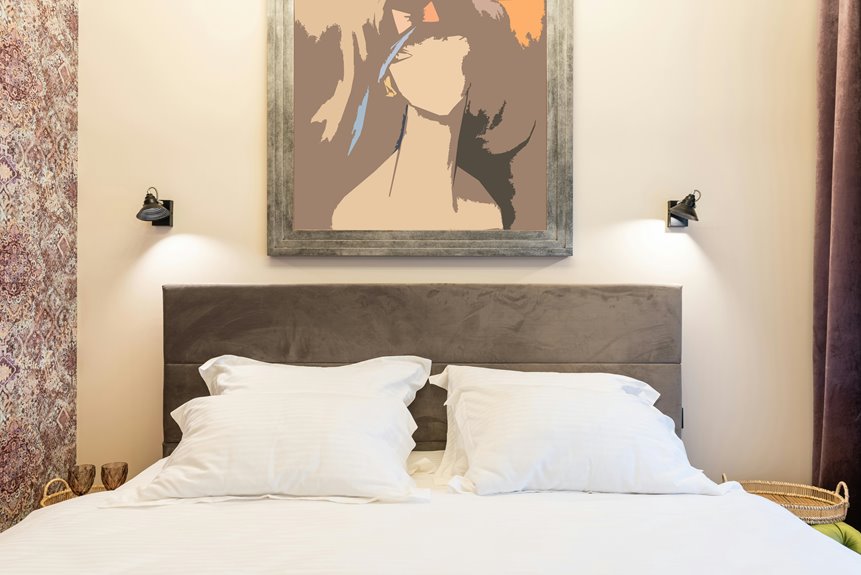
I’ve learned that decorating a small bedroom means making every piece serve a purpose. Start with warm neutrals—beiges, creams, taupes—then layer in mustard accents through textiles and walls. Choose a slim metal bed frame to keep sightlines open, then add floating shelves and bedside stools instead of bulky nightstands. Hide storage in under-bed drawers and woven baskets. Layer patterns within your color palette, hang mirrors opposite windows, and keep artwork petite—think 8×10 frames. These strategies create a small bedroom with clear intention and an open feel, with more approaches available to explore.
Start With a Cohesive Color Palette for Small Bedrooms
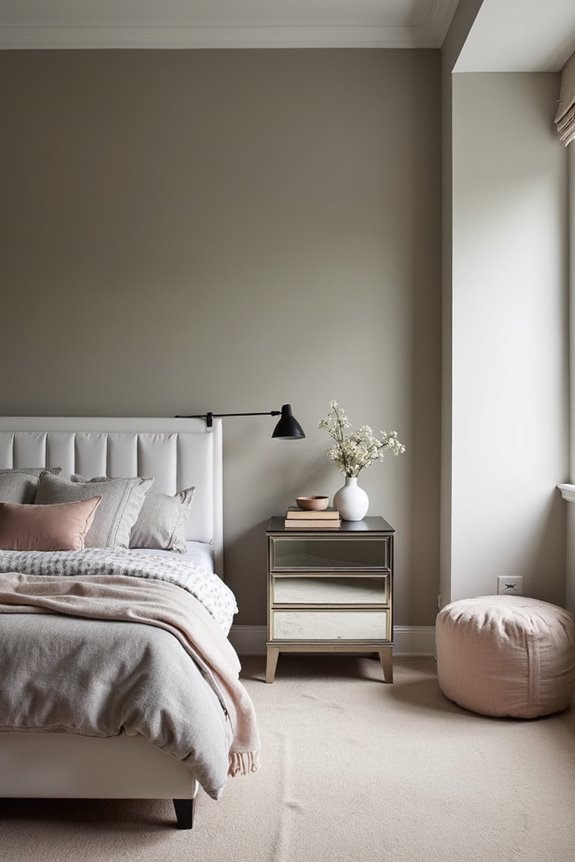
Why do small bedrooms feel cramped when they’re decorated with clashing colors? I’ve found the answer: a cohesive color palette works well.
I start by choosing warm neutrals inspired by oak parquet flooring—think soft beiges, creams, and taupes. Then I layer in subtle mustard accents across textiles, walls, and furnishings. This approach keeps colors from competing visually, which matters in compact spaces.
The payoff comes when I align golden undertones throughout the room. My bedding, throw pillows, and wall paint all share the same warm family. I add patterns and textures within this palette—a textured wall, patterned curtains, layered blankets—without introducing new colors.
This layered palette creates depth while maintaining that soothing, unified feeling. Your small bedroom becomes a space where you can relax, not a visual battle.
Choose a Metal Bed Frame to Open Up Sightlines
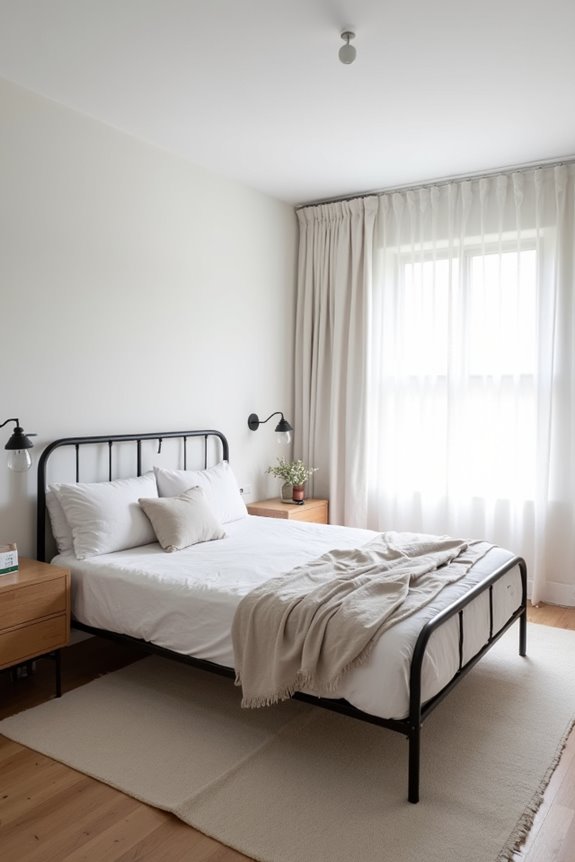
When you swap out a heavy wooden or upholstered headboard for a metal bed frame, your room feels more spacious. The open design keeps your sightlines clear, letting your eyes travel across the wall behind it. This creates depth in a small bedroom.
I recommend choosing a metal bed frame with a light finish or slim silhouette. These options enhance visual openness and improve airflow throughout your space. The frame won’t crowd your room or block windows.
A metal bed frame frees up floor area. You can add wall-mounted shelves or built-in storage without feeling cramped. Pair it with minimal decor, and you’ve created a space that feels spacious and well-considered.
Hide Storage in Baskets, Under Beds, and Built-Ins
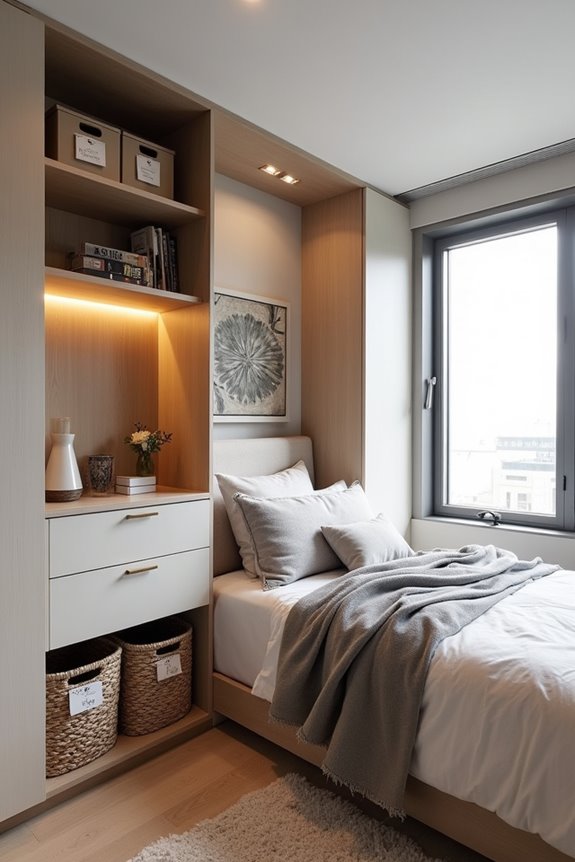
I’ve found that baskets tucked beside the bed or under furniture help me use my small bedroom more effectively—they hold throws, magazines, and seasonal items without using precious floor space. Built-in storage solutions like under-bed drawers and wall-mounted shelving work well with woven or fabric baskets, letting me keep everything organized while maintaining those open sightlines that make tiny rooms feel bigger. When I choose baskets in neutral tones that match my room’s palette and give them pull-out or removable lids, tidying up becomes quick and easy, so I actually do it.
Baskets For Cozy Storage
How do you hide clutter without making your small bedroom feel stuffed? I’ve found that baskets keep my space calm and inviting. They’re an effective way to stay organized while maintaining that cozy feeling I want.
Here’s what works best:
- Place open-weave baskets beside the bed for throws and magazines
- Tuck textile-wrapped baskets under furniture to maximize vertical space
- Choose neutral colors that match your palette so they blend with your décor
- Pair baskets with wall-mounted storage to keep floors clear
When I select baskets with intention, they become warm accents rather than visual clutter. Open-weave designs let me glimpse contents while preserving that airy feel. Quick-access storage keeps my essential items within reach, and my small bedroom finally feels like the organized space I’ve always wanted.
Built-In Solutions Maximize Space
Built-in storage solutions work effectively for small bedrooms because they maximize available space. Wall-decked storage and integrated bed storage improve functionality in tight quarters. Consider a bed with built-in drawers underneath—you’ll reclaim precious floor space while keeping essentials within arm’s reach. Wall-mounted cabinets and shelving create bedside nooks that eliminate the need for bulky nightstands. Hidden storage behind paneling or under window seats keeps clutter out of sight, maintaining an open feeling in the room. Baskets tucked beside your bed serve a practical purpose while remaining accessible. These built-in solutions work together, creating a bedroom that is organized and efficient rather than cramped or chaotic.
Mix Patterns and Textures Without Overwhelming the Space
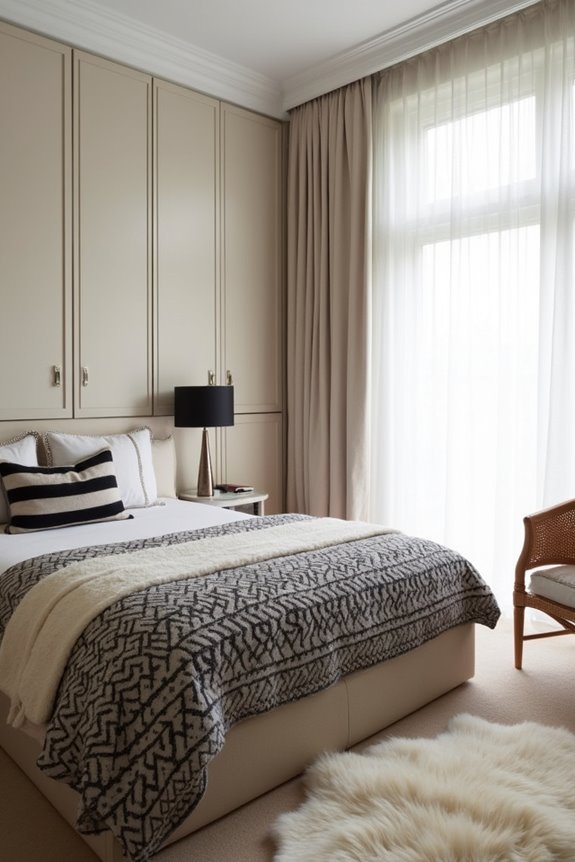
When you’re decorating a small bedroom, the trick isn’t avoiding patterns and textures—it’s using them strategically so your space feels intentional instead of chaotic. Bold patterns work well when you anchor them in a cohesive color family. Think of it as creating layers that work together rather than compete.
Here’s how to mix patterns and textures:
- Choose one bold statement—perhaps a patterned wallpaper or green ceiling
- Repeat your color palette across textiles, curtains, and bedding
- Layer different textures: velvet, linen, woven grass cloth walls
- Use built-in storage with subtle patterns to avoid bulky pieces
The result comes when repeating motifs flow throughout your room. Textured elements like layered textiles add genuine depth without visual overwhelm, creating a space that feels both complete and calm.
Maximize Vertical Space With Floating Shelves
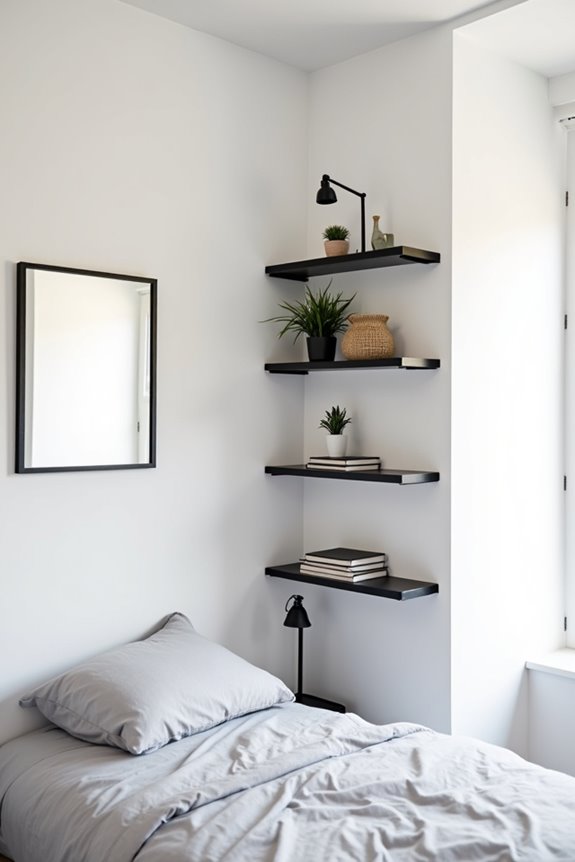
Once you’ve layered your patterns and textures thoughtfully, you’ll want to make sure they’ve got the right home—and that’s where floating shelves come in. Wall-mounted floating shelves offer practical storage solutions for small bedrooms without consuming floor space. They let you display what matters while keeping everything organized and visible.
Choose shelves with wood-slatted backs or finishes that match your room’s palette. This integration makes them feel purposeful, not like afterthoughts. Position yours strategically—framing your bed and avoiding traffic paths—so they enhance flow rather than interrupt it. By keeping surfaces clutter-free with just essentials and personality items, you maintain that light, airy feeling that makes your small bedroom feel spacious.
Make Your Windows a Design Statement
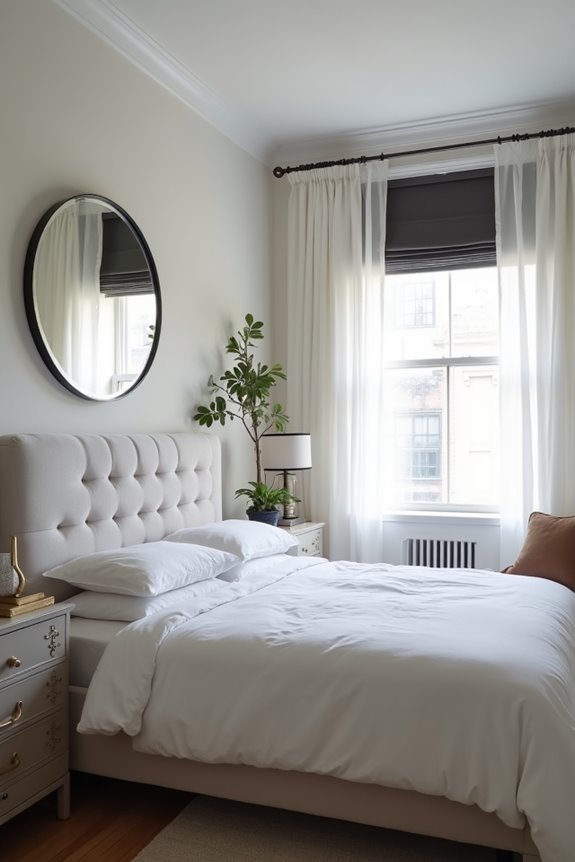
I’ve discovered that layering sheer curtains under patterned panels makes your small bedroom’s windows a focal point that actually makes the room feel bigger. By combining light-filtering fabrics with natural woven shades, you’ll control how much sunlight filters in while keeping those sightlines open and uncluttered, which is exactly what small spaces need to function properly. The texture and pattern play together well, creating visual interest that ties your whole color scheme together without overwhelming the room.
Layered Treatments Add Depth
Why settle for plain curtains when your windows can become the room’s most distinctive feature? I’ve discovered that layered treatments add depth to small bedrooms, creating spaces with clear intention and thoughtful design. By combining natural woven shades with patterned panels, you’ll create visual dimension while filtering daylight beautifully.
Here’s how I approach layered window treatments:
- Start with natural linen or jute shades for softness and light control
- Add patterned panels that echo your room’s color palette
- Install hardware that complements your furnishings seamlessly
- Coordinate fabrics with your bedding and textiles for unity
This multi-layered approach balances privacy and openness effectively. Your windows become architectural focal points that anchor the entire room. When treatments align with your overall design, small bedrooms feel larger, calmer, and genuinely welcoming—a sanctuary you’ve truly crafted.
Windows Define Perceived Space
How much of your small bedroom’s charm comes down to what you do with your windows? Windows are a practical tool for space perception. When you mount curtain rods high and near the ceiling, you create a height illusion that makes rooms feel taller and airier. Using tall, narrow window treatments draws the eye upward naturally.
Install built-in window seating if possible—it extends your visual space beyond the glass. Layer sheer panels under patterned curtains to maximize natural light while adding texture. This combination lets you control brightness without sacrificing that open, spacious feeling. Your window treatments should work with your room, creating a deliberately designed appearance.
Pattern and Texture Combination
Your windows deserve to be so much more than a simple functional feature—they’re your room’s biggest design opportunity. I’ve learned that layering textures through window treatments creates depth in small bedrooms.
Here’s how I approach this:
- Pair natural woven shades with patterned panels in your chosen color palette
- Match curtain fabrics to wall coverings and bedding for unified aesthetics
- Layer a patterned rug below, echoing the same color family overhead
- Balance bold patterns with intentional scale and repetition across surfaces
When you align these elements—walls, textiles, and window treatments—you’re not just decorating. You’re building dimension and openness that makes small spaces feel larger. Your bedroom becomes a place where every detail contributes to the overall design, where pattern and texture work together rather than compete. Small spaces benefit from this deliberate approach.
Pick Multi-Functional Furniture to Save Space
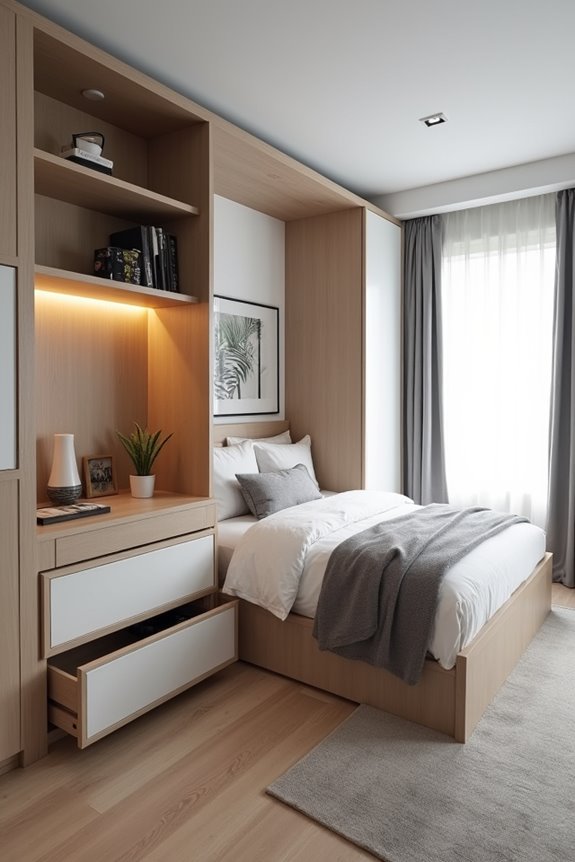
When you’re working with limited square footage, every piece of furniture needs to earn its place in your room. Multi-functional furniture helps you organize cramped spaces effectively. Consider a bed with built-in drawers underneath—it stores seasonal clothing and linens while keeping your floor clear. Wall-mounted storage and built-in wardrobes maximize vertical space that would otherwise sit empty. A nightstand with pull-out shelves serves double duty, holding essentials while displaying decor. Murphy beds paired with surrounding shelving vanish into walls during the day, creating usable square footage.
Metal bed frames offer lightweight aesthetics compared to bulky wooden headboards. These space-saving pieces blend sleeping, dressing, and working zones into one layout. When you choose versatile surfaces and thoughtful arrangements, your small bedroom becomes functional and inviting.
Use Stools or Wall Sconces Instead of Nightstands
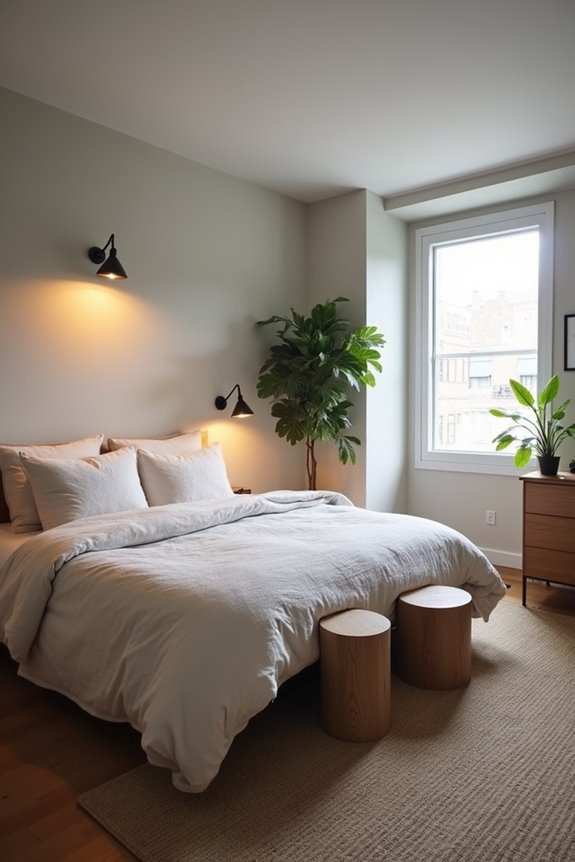
Why clutter your small bedroom floor with a traditional nightstand when you’ve got smarter options?
I’ve discovered that swapping nightstands for a bedside stool or wall sconces changes how I use my space. Here’s what makes this shift worthwhile:
- Bedside stools provide seating and hidden storage without eating floor space
- Wall sconces offer space-saving lighting that keeps surfaces clear
- Lightweight, rounded-corner designs enhance airflow and movement
- Wireless clutter-free storage keeps essentials accessible yet hidden
A bedside stool with a trundle bed gives me seating plus extra sleeping options. Wall sconces, meanwhile, reduce visual clutter while offering adjustable lighting near my bed. I position them carefully to maintain clear pathways while keeping everything I need within reach. This approach makes my small bedroom feel larger and more organized.
Add Small Art and Mirrors to Expand the Room Visually
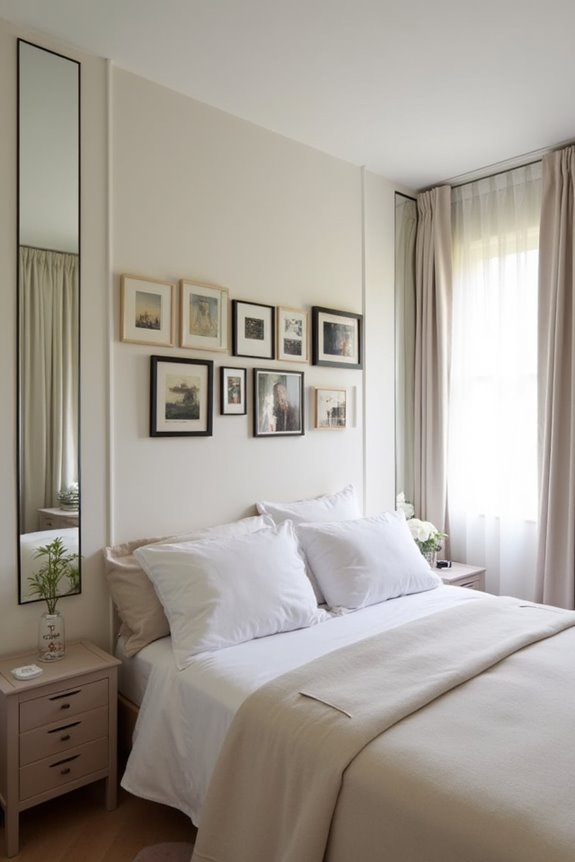
How do you make a cramped room feel twice as wide without knocking down walls? Small art and mirrors work well together. I hang petite artwork—think 8×10 or 11×14 frames—along one wall to draw your eye inward, which actually elongates the space. I pair each piece with complementary frames that match my monochromatic palette, keeping everything calm and connected.
Mirrors are a practical asset. I position them opposite windows to catch natural light and bounce it around, creating that open, airy feeling we all want. When I align mirrors with my room’s color family, the visual expansion feels deliberate and cohesive. Strategic placement helps a tight bedroom feel more spacious. Light reflection becomes your ally, not your enemy.
Optional: Create a Monochromatic Cocoon for Extra Coziness
Imagine stepping into your bedroom and feeling instantly wrapped in calm—that’s what a monochromatic cocoon does for a small space. Choosing one hazy, mid-toned color creates an enveloping sanctuary that feels personal and intimate.
Here’s how to build this:
- Select a soft, muted shade—think dusty sage or warm taupe—for walls
- Layer textures in that same color family using grass cloth, velvet bedding, and linen
- Keep your bed as the anchor with subtle color contrast
- Minimize patterns and bold accents throughout
When everything communicates the same color story, your small bedroom becomes a cohesive retreat rather than a cramped space. Texture layering within your color family adds richness without visual chaos, while this calm ambiance lets you settle into a space that feels genuinely yours.