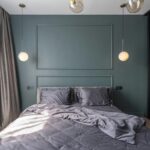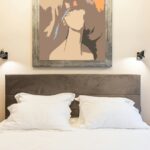
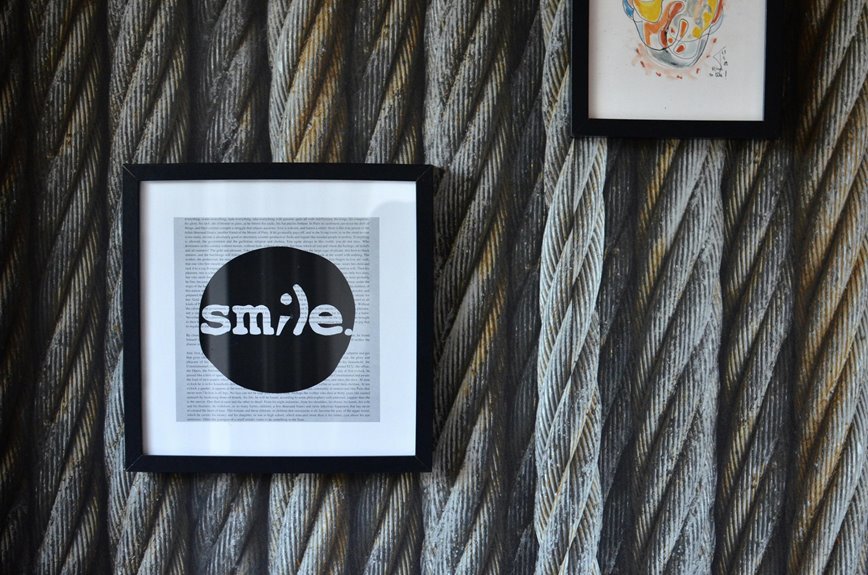
Create a gallery wall by laying out mixed frames on the floor first, spacing them 2–4 inches apart with a central anchor piece. Hang a single oversized artwork (60–90 inches) at eye level for visual impact. Paint or wallpaper an accent wall using tone-on-tone hues or moody colors. Install floating shelves at varying heights paired with mirrors and sconces to bounce light around. Layer texture with dividers and three-dimensional wall hangings like woven baskets and sculptural pieces. Each approach offers distinct personality—choose which fits your space best.
Create a Gallery Wall With Mixed Frames and Artwork
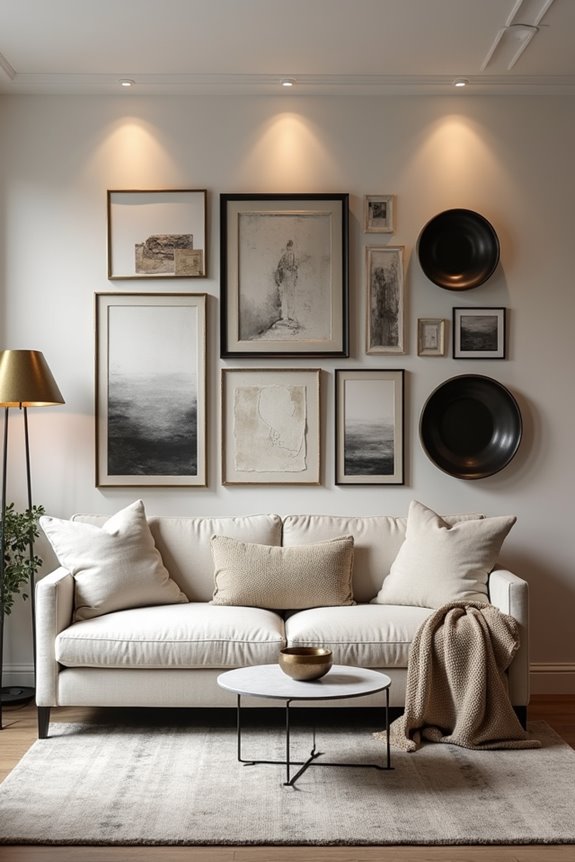
How do you turn a blank wall into something that tells your story? A gallery wall does exactly that. I start by laying out my mixed frames on the floor—varying sizes create natural rhythm across the large wall. I choose a cohesive color palette, maybe blacks and whites with natural wood, then mix mediums: photographs, paintings, prints. This variety keeps things interesting while the unified colors hold everything together.
I pick a central anchor piece, something bold that grounds the entire layout. Then I space frames evenly, about 2–4 inches apart, maintaining balance throughout. Before hanging anything, I tape paper templates on the wall to test my arrangement. The result? A narrative display that reflects who you are, blending nostalgic moments with contemporary art. It’s a worthwhile project.
Hang a Single Oversized Focal Point
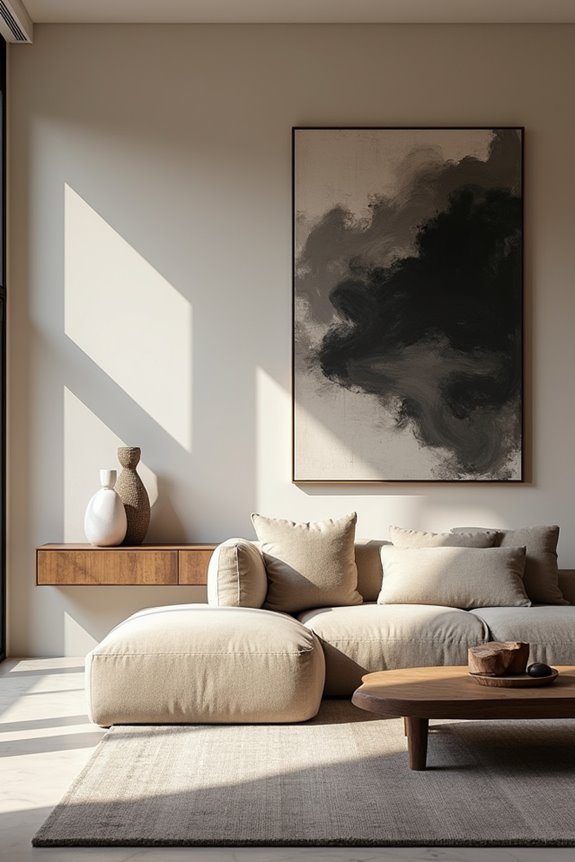
While a gallery wall celebrates variety and personal narrative, sometimes a single commanding piece does the work required to make an impact. I’d choose one oversized artwork spanning 60–90 inches or more to create dramatic visual weight on your large wall. Hang it at eye level, centered with your seating area, so it anchors the room. The key? Let negative space breathe around it. Keep your neutral background simple and uncluttered—this restraint allows your single piece to stand out. Add a picture light or track lighting to illuminate it without harsh shadows. Balance this statement with minimal other wall decor. When you commit to one powerful artwork, you’re not just decorating; you’re creating a room that feels deliberate and complete.
Paint or Wallpaper an Accent Wall for Instant Impact
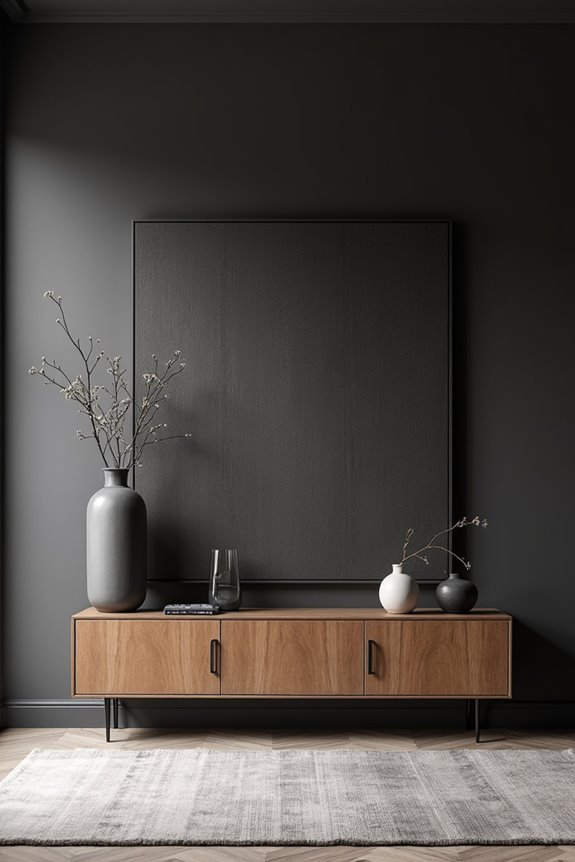
When you’re staring at a massive blank wall, painting or wallpapering just one section gives your entire room direction and purpose.
An accent wall works well in a large living room by creating that bold backdrop you need. You can choose tone-on-tone hues like dusty rose paired with pale pink for subtle depth, or go darker with moody colors that envelope the space warmly. Wallpaper adds pattern and texture without overwhelming things, and removable peel-and-stick options let you experiment without commitment.
| Option | Best For | Impact |
|---|---|---|
| Paint | Budget-friendly | Bold, permanent |
| Wallpaper | Pattern lovers | Textured focal point |
| Peel-and-stick | Renters | Flexible change |
| Architectural treatments | Drama seekers | Dimensional interest |
Align your accent wall with seating, match existing furniture tones, and consider lighting to anchor everything together.
Install Floating Shelves, Mirrors, and Sconces for Dimension
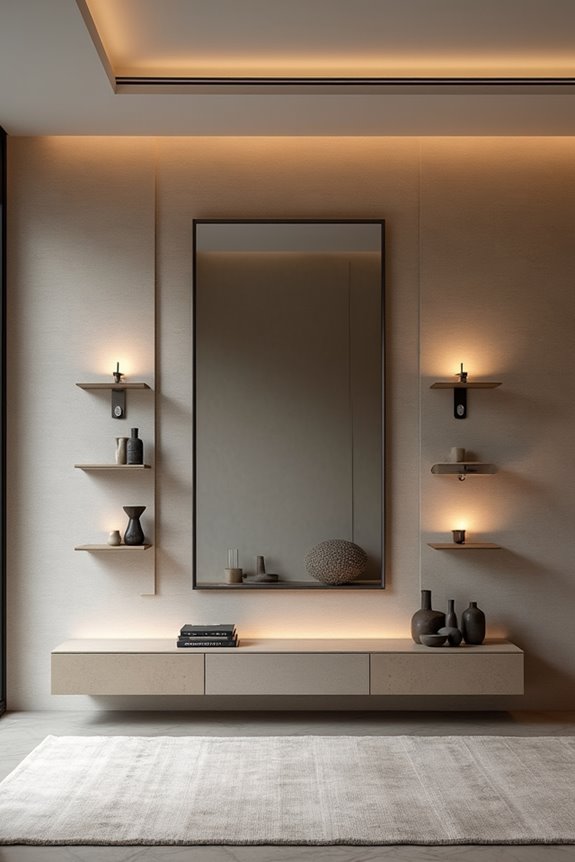
Why settle for a flat, empty wall when you can create real depth and visual interest? Layering floating shelves at varying heights makes your large wall more dynamic. Install them at different depths to frame seating and anchor your wall art effectively.
Pair these shelves with a prominent mirror positioned opposite your light source—it’ll reflect brightness and expand the space visually. Add sconces slightly above eye level to cast even lighting across everything.
Balance matters. Choose slim hardware that keeps focus on the architectural depth you’re creating. Mix open display shelves with closed storage pieces for a clean, breathable look. This combination of floating shelves, mirrors, and sconces adds dimension that makes your living room feel organized and welcoming.
Layer Texture With Dividers and Wall Hangings
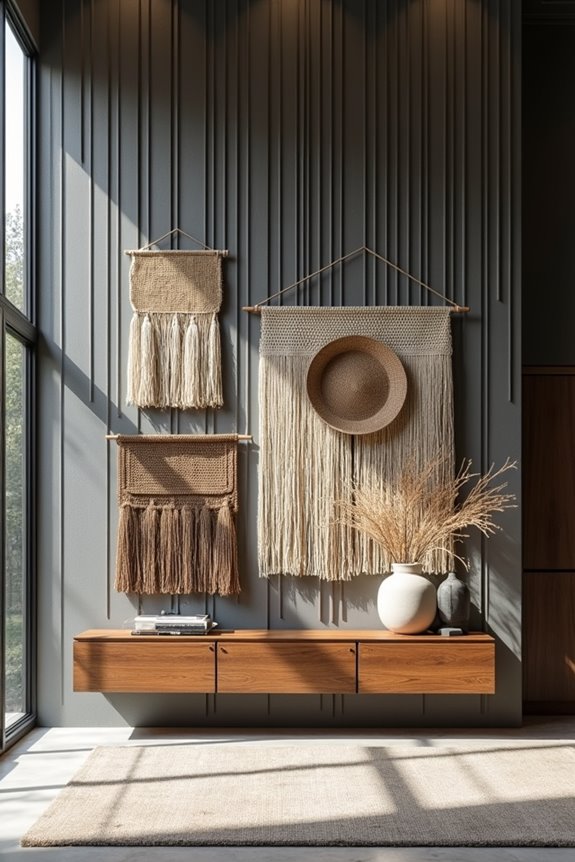
Once you’ve anchored your wall with shelves and mirrors, it’s time to build real texture into the space. Use dividers like shelving units, molding, and gallery rails to create distinct zones across your large wall. This approach lets you display art, photos, and decorative objects without overwhelming the eye.
Mix three-dimensional wall hangings—vintage plates, woven baskets, sculptural pieces—with flat framed art. The shadows they cast add depth you can actually feel. Combine materials: wood dividers, metal accents, fabric wall hangings, and glass elements work together well.
Balance everything by repeating shapes or colors. A triptych, three similar frames, or recurring tones tie your layered wall together. This rhythm keeps your space organized and connected, rather than chaotic.