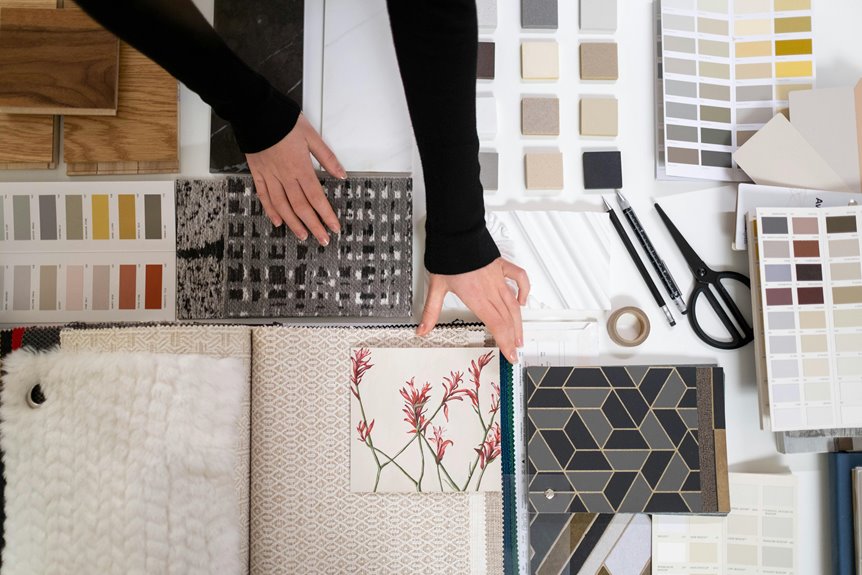
Retro Mod blends mid-century minimalism with 1980s boldness—you’re not choosing between eras, you’re making them work together. Start with earthy anchors like walnut, caramel, and rust, then layer pastels (mint, peach) with punchy neons (hot pink, electric orange) across textiles and furniture. Iconic pieces like Panton Chairs and Sputnik lighting ground the playfulness.
Repeat your 3–5 signature colors intentionally; mix geometric patterns at different scales; embrace vintage-inspired appliances in kitchens. Source smartly from estate sales and Facebook Marketplace. Success comes when you curate slowly, letting each piece earn its place in your space.
What Is Retro Mod: Blending Mid-Century and 80s Design
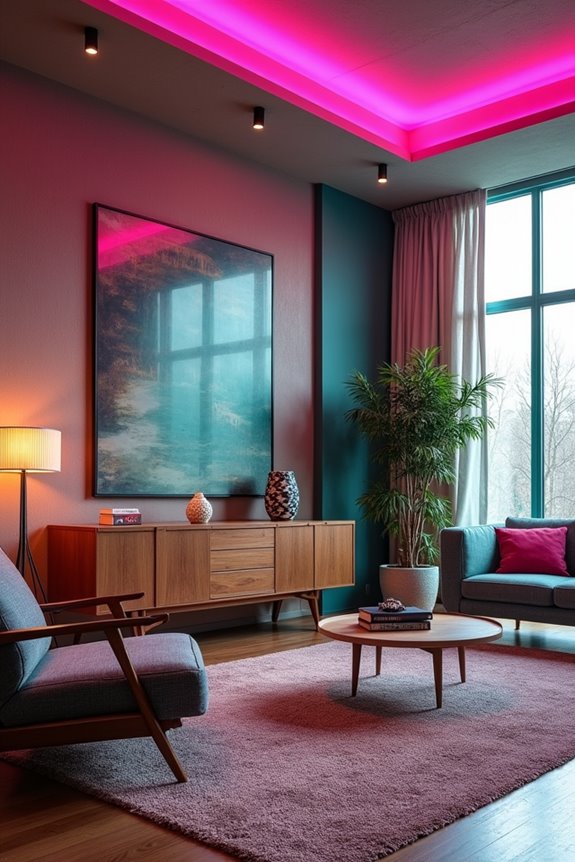
Ever wonder why some rooms feel both timeless and boldly modern at the same time? That’s Retro Mod—a design style that blends mid-century modern’s clean, uncluttered look with the 1980s’ fearless color and geometric energy. You’re creating a juxtaposition of minimalism and maximalism that feels current.
The approach works through intentional layering. Take an Eames-inspired chair with tapered legs and pair it with bold brights like teal or magenta through textiles. Mix warm wood tones with brass accents and glossy laminates. Add a neon lamp or statement lighting for visual interest.
What makes Retro Mod work is this balance—you’re honoring mid-century modern’s sophisticated restraint while embracing 80s audacity. It’s not about choosing one era; it’s about making both work together, creating retro aesthetics that remain relevant.
The Retro Mod Color Palette: Pastels, Neons, and Earthy Anchors
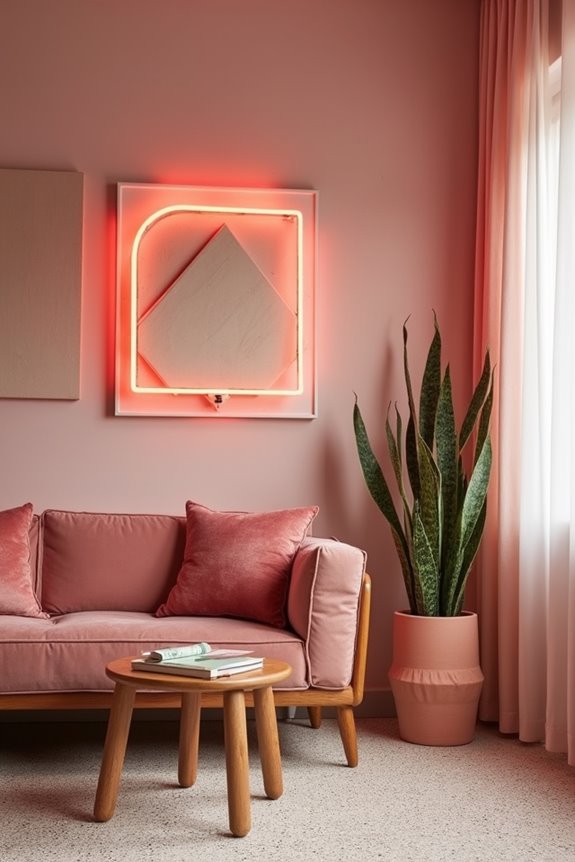
I’m excited to explain how Retro Mod color works—it’s all about balancing soft pastels like mint and peach with punchy neons like hot pink and electric orange, creating that playful high-contrast vibe that makes these spaces feel alive. The key approach is anchoring this pastel-neon mix with earthy tones such as warm terracotta, olive, and brass, which ground the whole palette so it doesn’t feel chaotic or overwhelming. When you repeat these 3–5 colors across your textiles, furniture, and metal finishes, you’ll create a unified story that ties your entire room together in a cohesive way.
Pastel and Neon Balance
When you’re designing a retro mod space, blending soft pastels with electric neons—and grounding everything with earthy anchors—creates rooms that feel both energetic and welcoming.
Here’s what I do: I start by choosing one dominant pastel—say, powder blue—then add a single neon accent, like electric pink, at just 10–20% of the room’s color scheme. This prevents the space from feeling chaotic. I pair a blush sofa with a glossy neon lamp and walnut wood furniture. The wood naturally calms the vibrant palette.
For finishes, I use matte textures on pastels to prevent visual overload, while glossy surfaces make neons pop. Three to five colors total keeps your color palette cohesive. This balance makes your space feel livable and grounded.
Earthy Tones as Foundation
Three foundational tones—walnut, caramel, and rust—are what I lean on first when I’m building a retro mod color scheme, and they work because they ground your space, preventing it from feeling chaotic or overwhelming. I pair them with natural materials like leather, wood, and stone to create warmth and depth.
| Earthy Tone | Best Use | Material Pairing |
|---|---|---|
| Walnut | Wall color, cabinetry | Dark wood furniture |
| Rust | Accent walls, textiles | Terracotta pottery |
| Caramel | Upholstery, trim | Brass fixtures |
When you establish this warm palette as your foundation, those playful pastels and neon accents become deliberate rather than scattered. You’re building a retro mod space with clear visual relationships between elements.
Iconic Furniture and Silhouettes That Define the Style
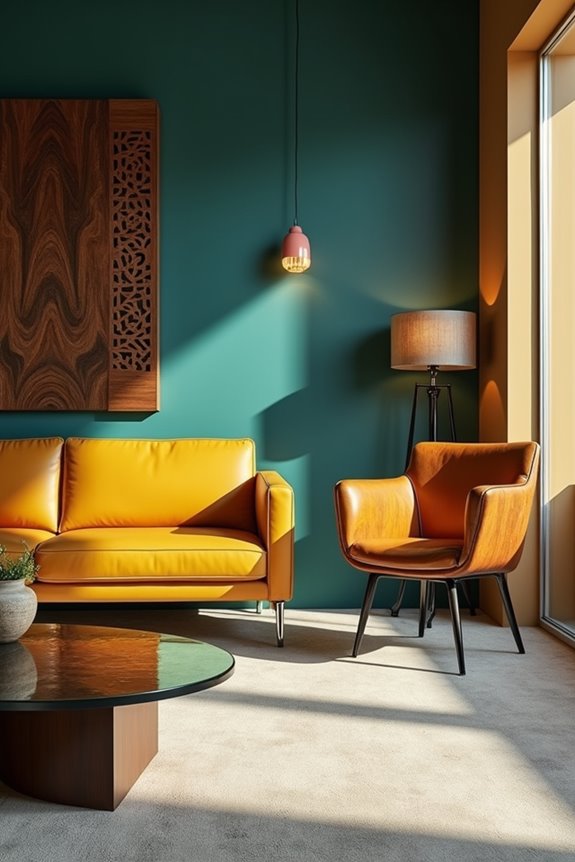
What makes a piece of furniture truly iconic? I’d argue it’s when design perfectly marries form and function. The Panton Chair, born in the 1960s, represents this well—its molded plastic construction created flowing curves that felt new. Mid-century silhouettes like the Eames Chair emphasize clean lines, tapered legs, and that weightless feeling we all want in our spaces. Pairing these pieces with walnut or teak wood tones creates visual interest, grounding the playfulness with warmth. Add space-age lighting—think sculptural floor lamps—and your room develops a narrative. These aren’t just furniture choices; they’re statements about who we are. They’re invitations to spaces where comfort meets bold self-expression.
Retro Mod Lighting: From Atomic to Geometric Fixtures
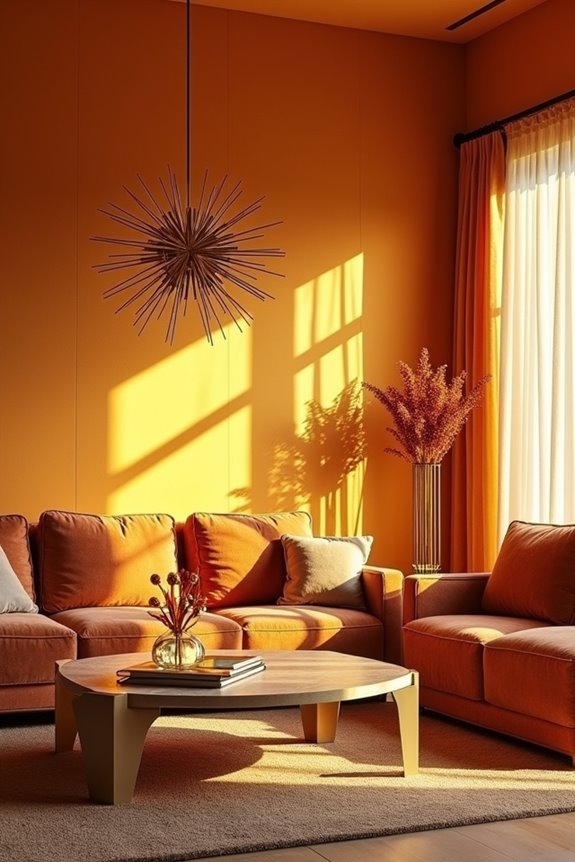
Retro mod lighting brings mid-century futurism into sharp focus—think starburst chandeliers and sunburst mirrors that evoke 1960s space stations. Geometric fixtures feature bold hexagons, diamonds, and teardrops in brass and chrome finishes, creating that stark, clean aesthetic. Pair them with smoked glass and polished brass materials that distribute light while maintaining sleek, purposeful lines.
The contrast between a dramatic orbital floor lamp or cone-shaped pendant and simple contemporary furniture demonstrates how atomic-age design functions in modern homes. These pieces anchor a room through their bold forms and reflective surfaces, creating visual interest without relying on ornamentation.
Atomic Age Design Elements
When you’re hunting for lighting that truly captures mid-century design, you’ve got to understand the atomic age—that thrilling era when designers looked up at the stars and decided to bring that cosmic energy into our homes. Sputnik lamps became icons, with their radiating arms creating dramatic starburst patterns overhead. These geometric lighting pieces feature clean lines, chrome finishes, and glass diffusers that scatter light beautifully throughout your space. What I love most is how atomic age fixtures balance boldness with function—they’re conversation starters that actually illuminate well. Molded plastic and lucite materials give these designs their characteristic glow, while polished surfaces reflect light dramatically. You’re not just installing a lamp; you’re anchoring your room with genuine mid-century character.
Geometric Fixture Styles Today
Today’s geometric fixtures take that atomic energy we just explored and reshape it into pure sculptural art. I find these pieces exciting because they’re not just lighting—they’re design choices. Modern retro mod lighting combines brass, chrome, and smoked glass in spheres, hexagons, and stepped pyramids that command attention. Energy-efficient LEDs let us enjoy atomic-inspired chandeliers and sunburst fixtures without guilt. The high-contrast pairing of gold tones with black or white shades creates visual anchors in our spaces.
| Material | Shape | Color Pairing |
|---|---|---|
| Brass | Sphere | Gold + Black |
| Chrome | Hexagon | Chrome + White |
| Smoked Glass | Diamond | Brass + Black |
| Mixed Metal | Sunburst | Gold + White |
These contemporary reinterpretations work well in any home celebrating bold design.
Retro Mod Patterns and Prints: Maximalism Meets Minimalism
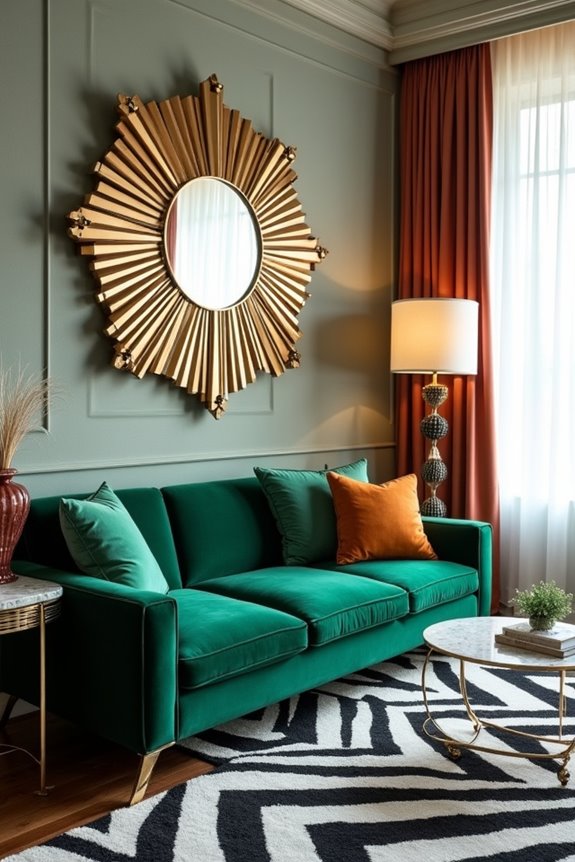
How do you fill a room with bold, eye-catching designs without it feeling chaotic? That’s where Retro Mod patterns work. This design approach blends maximalism with minimalism, creating visual excitement that doesn’t overwhelm.
Mid-century geometric patterns—think boomerangs, chevrons, and atomic shapes—anchor a space well. The approach? Pair saturated colors like teal and mustard with crisp white or gray to keep things balanced. These color combinations add clarity amidst complexity.
What works: mix pattern scales strategically. Large graphic prints command attention while smaller patterns and solid surfaces provide breathing room. Repetition matters too—repeat your signature print across two to four pieces to unify the look without overdoing it. This thoughtful approach to geometric patterns creates that Retro Mod effect.
Retro Mod in the Bedroom: Romance and Bold Geometry
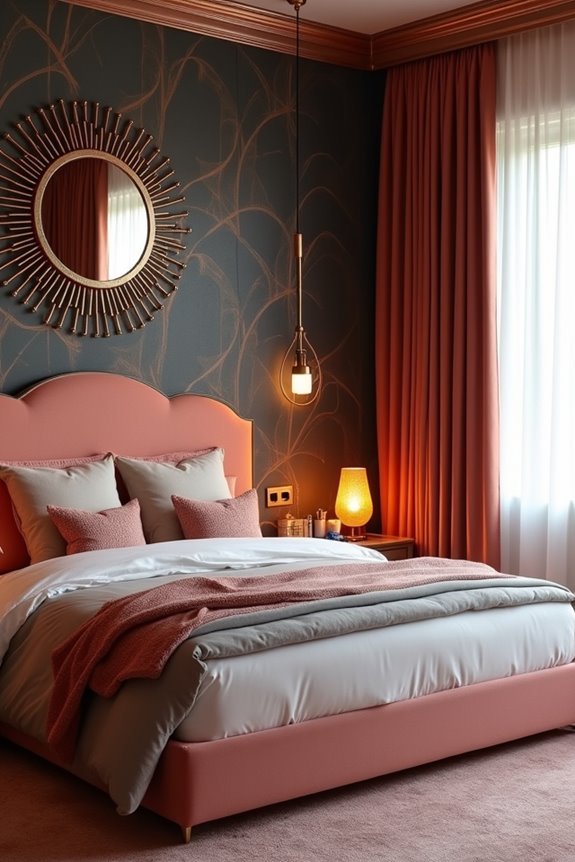
Your bedroom’s a sanctuary, and Retro Mod design lets you create one that’s both daring and deeply personal. This style pairs vintage charm with bold geometry—think low-profile platform beds with angular headboards that command attention. A geometric-patterned rug grounds the space, while Sputnik chandeliers provide that characteristic atomic-era glow overhead.
Balance your statement pieces with intention. Pair teal or mustard velvet upholstery with brass hardware, then soften the look with knit throws and sheer curtains. A glass-topped nightstand and mirrored dresser maintain clean lines without feeling austere.
You’re building a personal retreat that expresses who you are. This bedroom style celebrates your boldness while maintaining romantic elements.
Retro Mod Kitchen & Dining: Nostalgia Meets Function
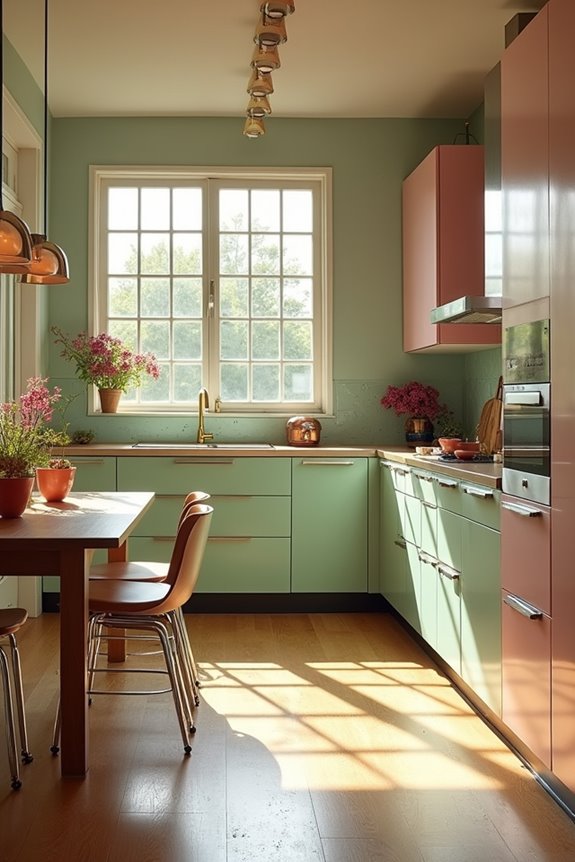
What if your kitchen could feel like a 1950s dream while running on today’s technology? That’s exactly what a retro mod kitchen delivers. Pairing vintage-inspired appliances like SMEG or Big Chill fridges with modern efficiency gives you authentic 1950s charm without sacrificing performance. Open shelving showcases mismatched vintage dishware and transferware, creating a display that’s both beautiful and functional. White enamelware with colorful rims adds genuine vintage utility. A butcher block island grounds the space. In your dining area, a vintage farmhouse table with mismatched chairs, retro lighting, and bold patterned wallpaper completes the mid-century aesthetic. This blend honors period character while keeping everything practical for everyday life.
Finding Retro Mod Pieces That Fit Your Budget
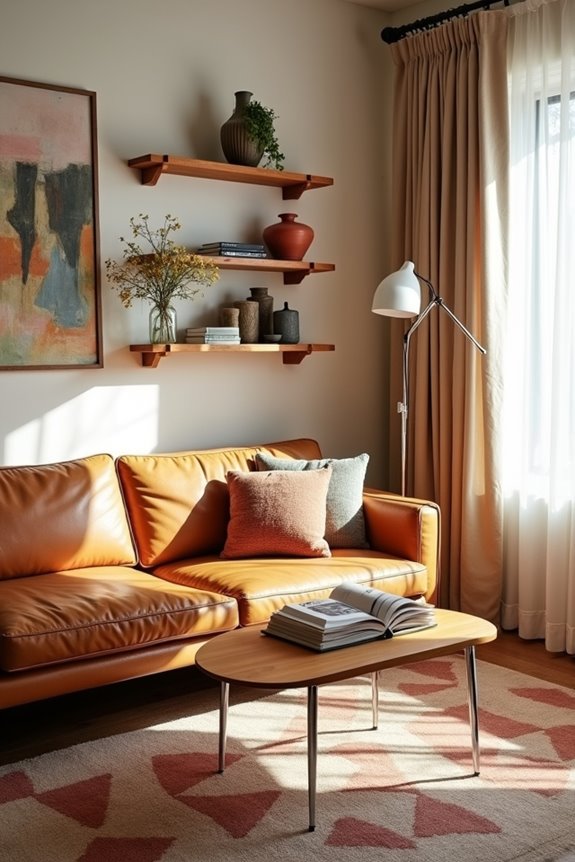
The key to building an authentic retro mod home isn’t having a bottomless wallet—it’s knowing where to look. I’ve discovered that estate sales and flea markets are goldmines for budget-friendly vintage furniture without the designer price tags. Online platforms like Chairish, 1stDibs, and Facebook Marketplace let you filter by era, style, and price to find exactly what you need.
Here’s what I recommend:
- Scout estate sales first—they’re treasure troves of quality pieces
- Check flea markets weekly for rotating inventory
- Explore online vintage marketplaces for convenience and comparison
Solid-wood vintage finds deserve refurbishment rather than replacement. A professional reupholstering or refinishing job often costs less than buying new mid-range furniture. Family heirlooms and grandmother’s attic pieces? They’re free character with genuine history built in. That’s how we create homes that tell your story.
Building Your Retro Mod Collection: Curation Over Time
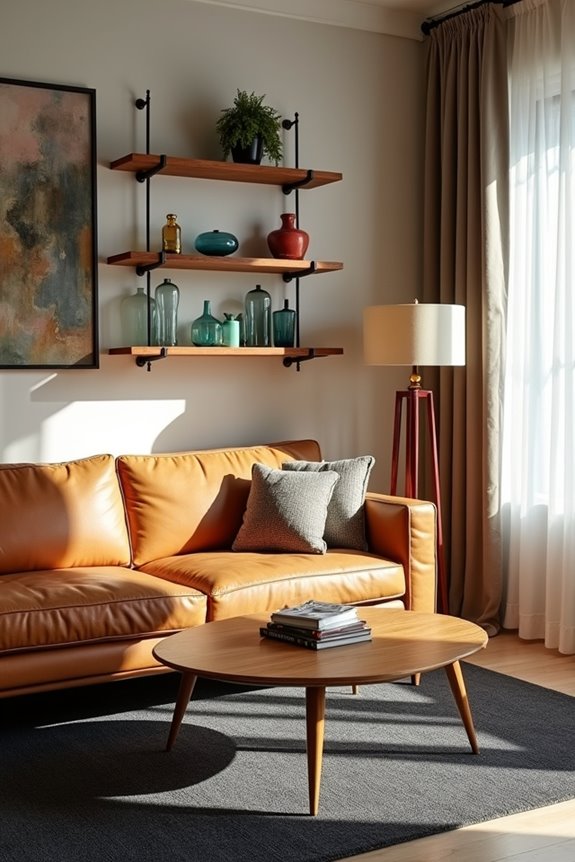
How do you build something lasting when you’re not buying it all at once? Curating vintage decor with intention creates spaces that work. Rather than rushing to fill areas, I anchor my room with three to five colors—say, teal, brass, and walnut—and let that guide every choice. Each signature piece earns its spot through solid bones and thoughtful scale. I rotate accessories seasonally, update lampshades, and reupholster with modern textiles to keep things fresh. This gradual approach means my collection stays cohesive without feeling forced. I mix eras using common threads like wood tone or proportion, creating natural contrast. A vintage globe or striking wall art becomes my reference point, sparking future acquisitions. The result? A space that tells my story.