I’ve discovered that vintage Christmas decorations hiding in your attic could be worth serious money. Mercury glass ornaments from the late 1800s fetch hundreds of dollars, while Department 56 villages typically sell for $230–$300. Blow molds and aluminum trees command $260–$343, especially with original packaging. Licensed character figurines like Snoopy Santas reach $300–$460. Condition matters significantly—mint pieces with original boxes can multiply their value three to five times over. There’s much more to uncover about which specific pieces collectors actually want.
How Much Are Vintage Christmas Decorations Worth?
Ever wonder why that box of old ornaments in your attic might be worth serious money? Vintage Christmas decorations command impressive prices, and discovering what you might own can be worthwhile.
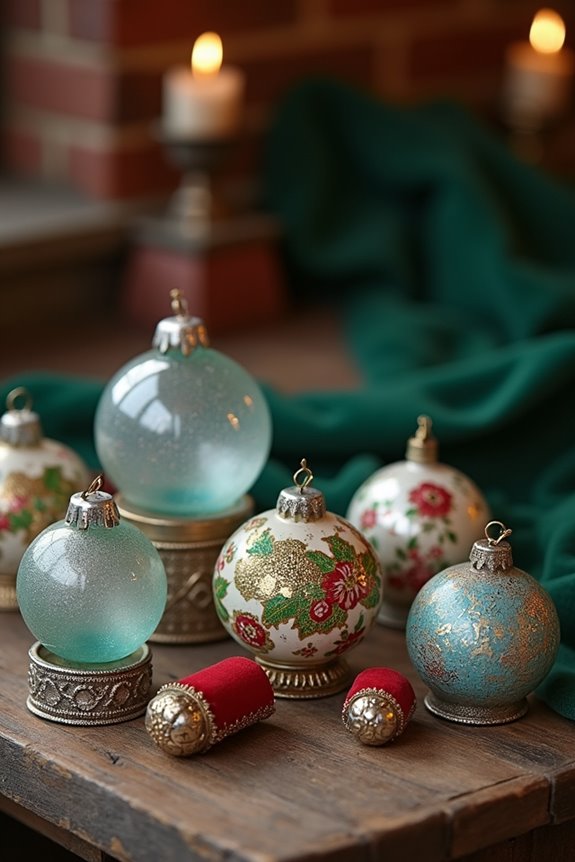
Mercury glass ornaments from the late 1800s and early 1900s are valuable, sometimes fetching hundreds of dollars. Shiny-Brite baubles in rare shapes or unusual colors can offer substantial worth, particularly in original packaging. Goose feather trees from before 1950 typically range from $300 to $800, depending on condition and completeness. Blow molds and aluminum Christmas trees also attract serious collectors willing to pay premium prices for pristine examples with original accessories.
Your forgotten decorations could represent real treasure.
Department 56 Collectible Villages: $230 to $300
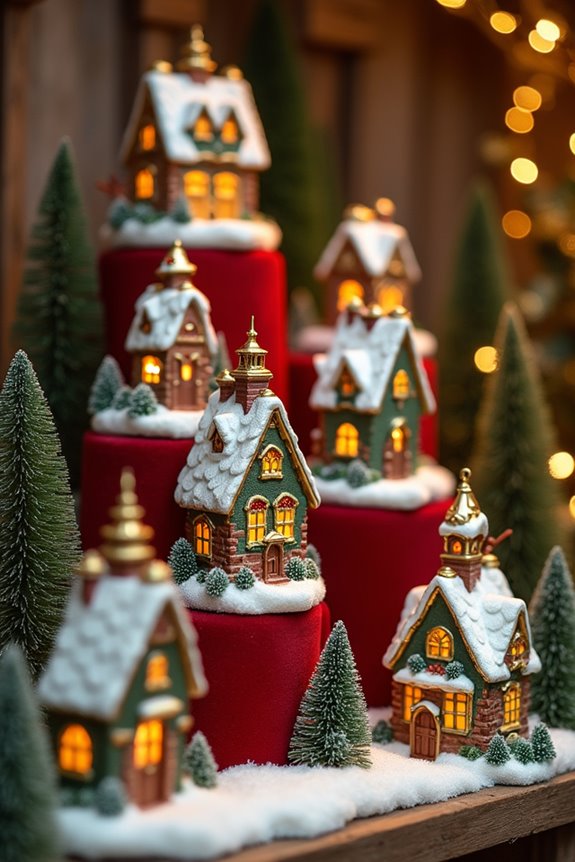
What makes a little ceramic house worth hundreds of dollars? It’s the value of Department 56 collectible villages. These pieces command serious money, ranging from $230 to $300, and for good reason.
Department 56 collectible villages command serious money, ranging from $230 to $300, making these ceramic houses genuine investments.
Here’s what drives their value:
- Discontinued production makes older pieces increasingly rare and sought-after
- Original box presence significantly boosts resale prices
- Limited series status, like the Dickens Village line, creates collector demand
- Special features such as illuminated glass atriums add appeal
The 2005 Christmas at Ashby Manor exemplifies this perfectly at $299.99. Meanwhile, the National Lampoon Griswold Holiday House hit $235.24 thanks to cultural nostalgia. These villages sell quickly because collectors value them. Condition matters enormously too. Keep yours in good shape, maintain all original components, and you’re protecting a genuine investment that’ll only grow more valuable as time passes.
Blow Molds and Yard Art: The $260–$343 Range
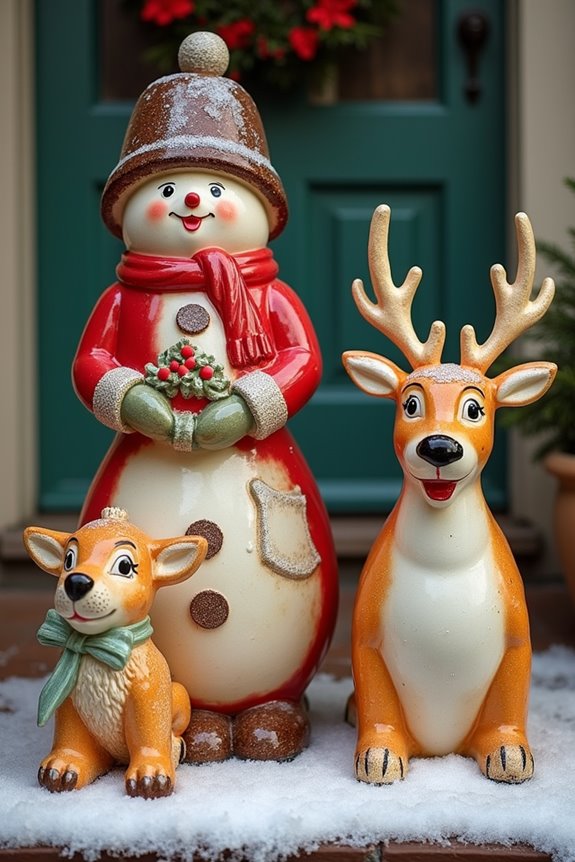
I’ve found that blow molds like the classic Vintage Santa Face Empire, which stands about three feet tall and commands around $343.14, really show how designer heritage shapes what collectors will pay. What matters is that condition affects value significantly—a pristine 1980s–1990s stack-of-presents blow mold might fetch $260, while a Snoopy Santa decoration in excellent shape easily reaches $299.99, proving that careful storage and maintenance directly translate to real dollars in your pocket. Carolina Enterprises’ 1977 Santa’s sleigh with reindeer demonstrates this principle perfectly, sometimes selling for over $450 when collectors recognize both the maker’s reputation and the piece’s well-preserved state.
Designer Heritage And Value
When you step into the $260–$343 price range, you’re entering territory where mid-century outdoor decorations become serious collectibles. This is where designer heritage matters, and here’s what separates the valuable pieces from the rest:
- Shiny-Brite ornaments with original packaging command premium prices in this range
- Authentication matters enormously—reproductions exist, so provenance documentation protects your investment
- Christopher Radko hand-blown glass and Holt Howard pieces fetch consistent mid-range values
- Condition assessment directly impacts whether you’re at $260 or pushing toward $343
Collectors in this segment understand that these pieces tell stories. Original packaging documents history and provides authenticity verification. When you find authenticated vintage treasures with their boxes intact, you’ve located something that other collectors actively seek and value.
Condition’s Impact On Price
The difference between a $260 blow mold and a $343 treasure often comes down to one thing: how well it’s survived the years. I’ve learned that condition matters enormously in this market. A Santa Face Empire in pristine shape commands $343.14, while the same piece with noticeable paint loss drops significantly. That wear tells a story—fading, chipping, discoloration from decades outdoors. Even slight imperfections matter. A Merry Christmas blow mold with Don Featherstone’s design reaches around $260 when well-preserved, but damage cuts deeper into value than you’d expect. Collectors like us understand that these vintage yard pieces aren’t just decorations; they’re investments. So before listing yours, examine every inch carefully. That paint condition? It’s literally money.
Mercury Glass and Brass Accessories: $365+ Investments
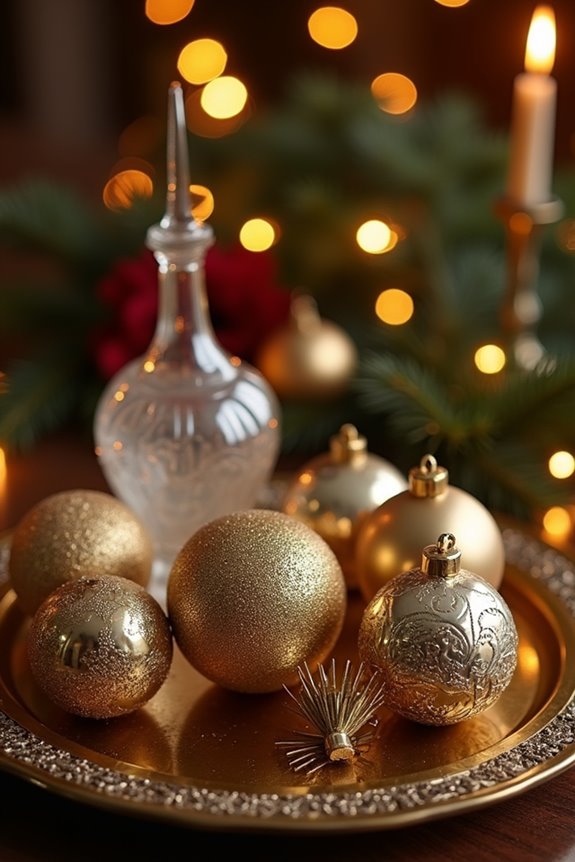
Mercury glass garlands from the 1940s represent some of the most treasured vintage holiday finds you’ll encounter, and I’m excited to walk you through why they’re worth your attention. These remarkable pieces typically feature 12 strands with intricate beaded designs, commanding prices around $365+ for complete sets.
What makes them valuable? Consider these key factors:
- Brass accents increase the overall display value considerably
- Original packaging and tissue dramatically increase worth
- Minimal fading or chipping separates premium pieces from ordinary ones
- Hand-blown construction commands noticeably higher collector prices
Combining mercury glass with brass accessories creates displays that feel luxurious. Collectors recognize these vintage Christmas decorations as investments worth protecting. The rarity of mint-condition pieces from this era means you’re holding something significant when you find one.
Why Condition and Provenance Multiply Your Value
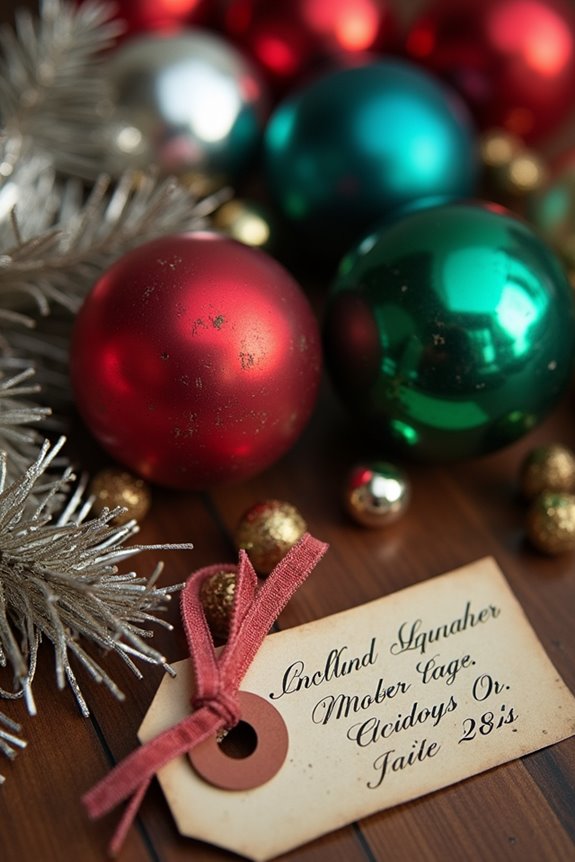
Protecting what you’ve found matters just as much as finding it in the first place. I’ve learned that condition and provenance affect the value of ornaments significantly. A Kugel ornament in mint condition? You’re looking at $800. But find one damaged, and that value drops considerably.
| Factor | Impact | Example |
|---|---|---|
| Mint Condition | 3-5x multiplier | Shiny-Brite sets: $200-$300 |
| Original Packaging | 2-3x multiplier | Rare colors command premium |
| Documented History | 1.5-2x multiplier | Provenance adds authenticity |
Here’s what I tell fellow collectors: keep detailed records of where your pieces came from. That documentation becomes valuable. Original packaging preserves value effectively. You’re not just collecting ornaments—you’re preserving stories. When you join our community of serious collectors, you’ll understand why we pay close attention to these details.
Character Collectibles and Licensed Figurines: Nostalgia That Sells
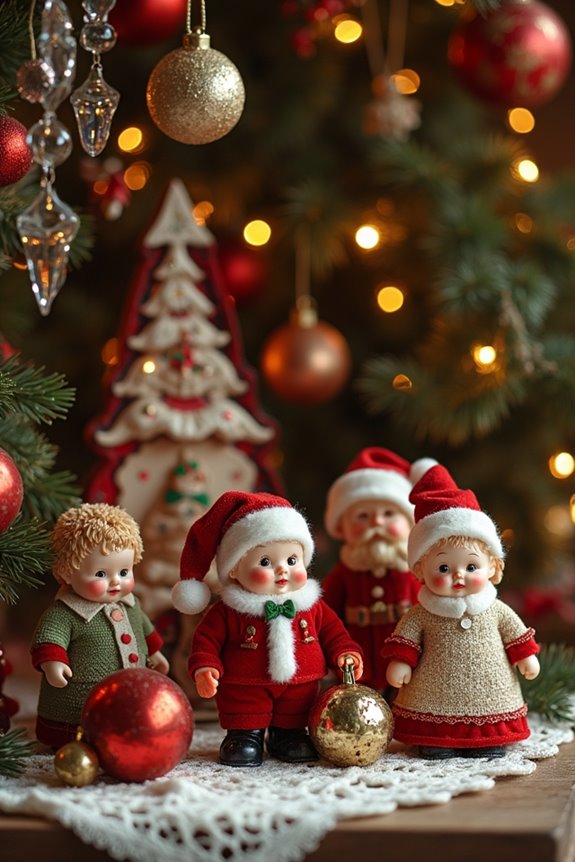
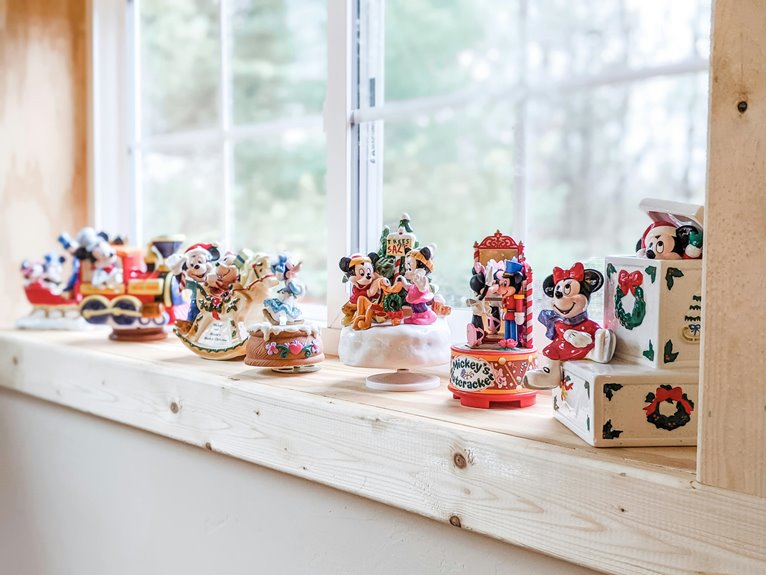
If you’ve got old blow mold Santas or character figurines from the 1960s and 70s tucked away somewhere, you’re sitting on nostalgia that collectors want to buy. Licensed figurines—think classic cartoon characters or department store Santas with original boxes—can fetch anywhere from $50 to several hundred dollars depending on rarity, condition, and whether they’re still in packaging. That emotional connection people feel to their childhood holidays is exactly what drives the market for these pieces, making your attic treasures valuable.
Licensed Character Blow Molds
Ever wonder why a vintage Snoopy Santa or Mickey Mouse blow mold from your grandmother’s yard can be worth $300–$460 today?
These licensed character blow molds are collectible treasures. Here’s what makes them valuable:
- Original packaging dramatically increases worth
- Pristine condition with no paint chips or fading commands premium prices
- Limited edition runs from specific brands like Don Featherstone designs are highly sought
- Complete sets with accessories fetch substantially more than individual pieces
Large-scale Santa and Snowman displays, especially those featuring reindeer sleighs or multi-figure scenes, regularly sell for $250–$500. Missing parts will significantly reduce your value.
The best finds are pieces left untouched, still in their original boxes. That’s when collectors discover real value in attics and estate sales.
Vintage Santa Figurine Collections
Nostalgia has a real price tag regarding vintage Santa figurines, and collectors are willing to pay serious money for the right pieces. I’ve watched Rushton Company ceramic Santas sell for hundreds of dollars, especially those with original packaging intact. The appeal grows when you find flocked or hand-painted versions featuring googly eyes and intricate details. You’re part of a passionate community when you hunt these treasures—collectors who understand that a pristine 1950s Santa with his sleigh and accompanying elves holds genuine value. Authentication matters tremendously here. That original box? It significantly increases value. Limited editions and character-licensed figurines command premium prices compared to mass-produced alternatives. Whether you’re seeking mid-century ceramics or porcelain pieces, these vintage collectibles represent legitimate nostalgia investments worth pursuing seriously.
Nostalgia-Driven Market Values
What drives collectors to shell out serious cash for a vintage ornament or figurine? It’s nostalgia mixed with genuine passion for these treasures. I’ve watched collectors respond with visible excitement when discovering rare pieces that bring back childhood memories.
Here’s what makes the market tick:
- Kugel ornaments fetch up to $800 because their thick German glass and fixed caps represent simpler times
- Shiny-Brite baubles command premium prices, especially unusual shapes with original packaging intact
- Aluminum Christmas trees from the 1950s–60s appeal to collectors in complete sets with original accessories
- Goose feather trees from pre-1950s Germany sell for $300–$800, their delicate condition offering historical value
We’re not just buying decorations. We’re reclaiming pieces of our past, connecting with others who share this appreciation for vintage collectibles.
Four Authentication Red Flags That Kill Your Asking Price
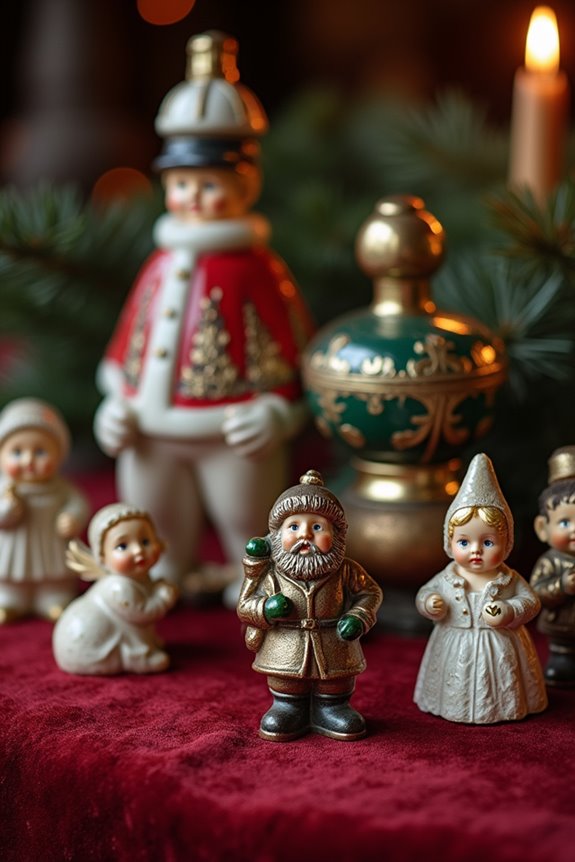
Before you list that Kugel ornament or aluminum tree online, you’ll want to spot the red flags that send buyers running the other direction.
First, examine packaging closely. Missing or damaged boxes devastate Shiny-Brite value dramatically. Collectors prize original sleeves and labels—they’re proof of authenticity. Second, inspect condition ruthlessly. Fading, chips, or water damage signal neglect. Buyers know pristine pieces command premium prices.
Third, research provenance carefully. Vague origins raise suspicion. Document where your decoration came from. Fourth, watch for reproductions. Modern fakes flood the market relentlessly. Compare manufacturing details against verified examples.
I’ve learned that honest assessment builds trust. Disclose flaws upfront. Your reputation matters more than squeezing extra dollars from one sale. Serious collectors appreciate transparency—they’re your future repeat buyers.