Mixing vintage with modern starts with one piece: a unified color palette. I pick blues, greens, mauves, and wood tones first, then build around them. Keep modern furniture as your backbone—sofa, bed frame, storage—and let three to five vintage pieces serve as anchors. Reupholster that inherited chair in bold fabric. Balance curved vintage finds with straight-lined modern pieces. Most importantly, give each item breathing room so it reads as deliberate, not cluttered. There’s a specific formula that organizes thrift-store chaos into curated style.
Build a Unifying Color Palette First
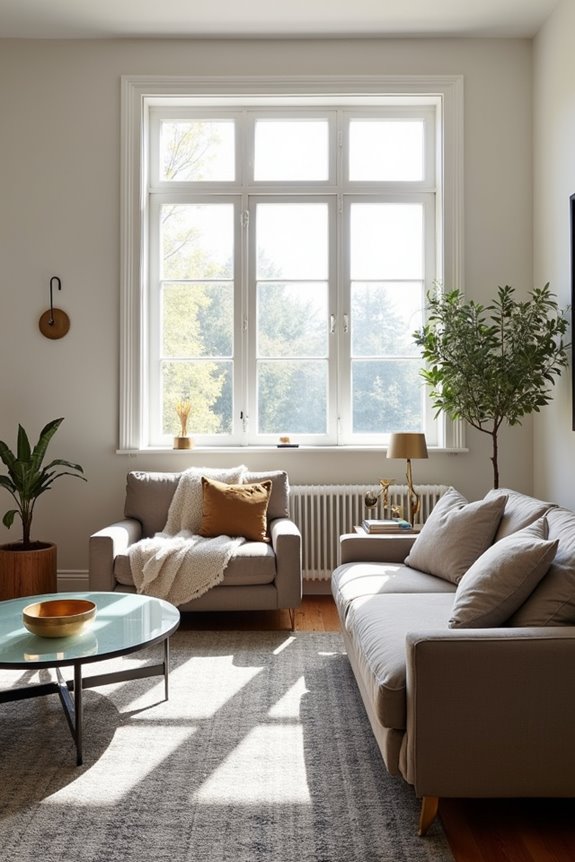
How do you keep vintage treasures and modern pieces from clashing? I’ve found the answer: start with a unifying color palette. When I commit to consistent hues—blues, greens, mauves, ochres, wood tones, brass, black, and white—my eclectic decorating becomes cohesive design. This approach lets vintage furniture and contemporary items work together naturally, rather than appearing randomly assembled.
A unified color base reduces that thrift-store jumble feeling. I choose my palette first, then build around it. The Fig House strategy inspired me: they reupholstered chairs in vibrant, coordinated fabrics to anchor their space. That boldness created room cohesion effectively.
Within this framework, I can still highlight focal moments with occasional room-specific color emphasis. Color coordination isn’t restrictive—it’s liberating. It lets my contemporary-vintage mix feel deliberate and genuinely mine.
Select Your Vintage Pieces as Accents, Not Your Foundation
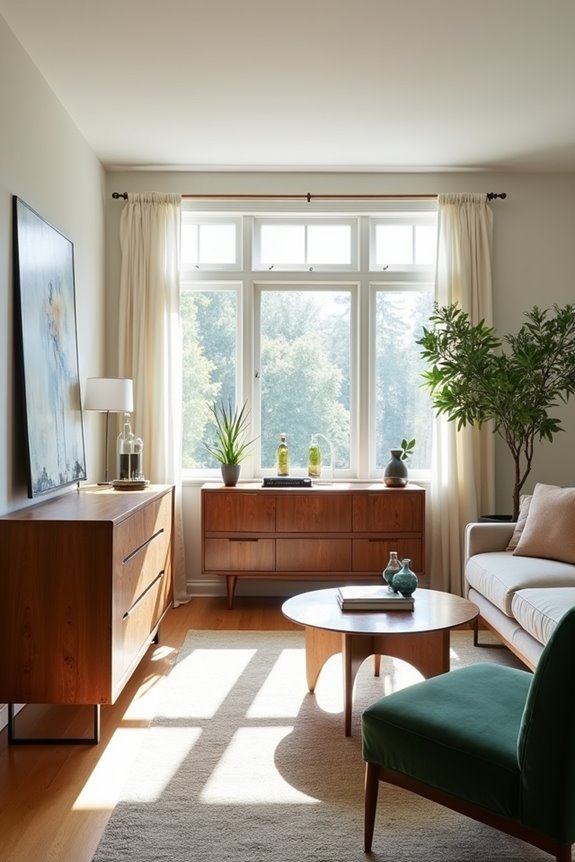
I’ve found that building your room around modern pieces first, then layering in carefully chosen vintage accents works best. Think of it like this: your contemporary sofa, bed frame, and storage become the reliable backbone, while that one striking mid-century credenza or ornate brass floor lamp becomes the focal point that makes people ask where you found it. By keeping about 80% of your space modern and reserving just 20% for vintage treasures, you’ll create rooms that feel well-considered and assembled rather than cluttered or mismatched.
Modern Base, Vintage Layers
When you’re blending eras, here’s what works: start with a solid modern foundation, then layer in your vintage treasures as the special accents that define the room.
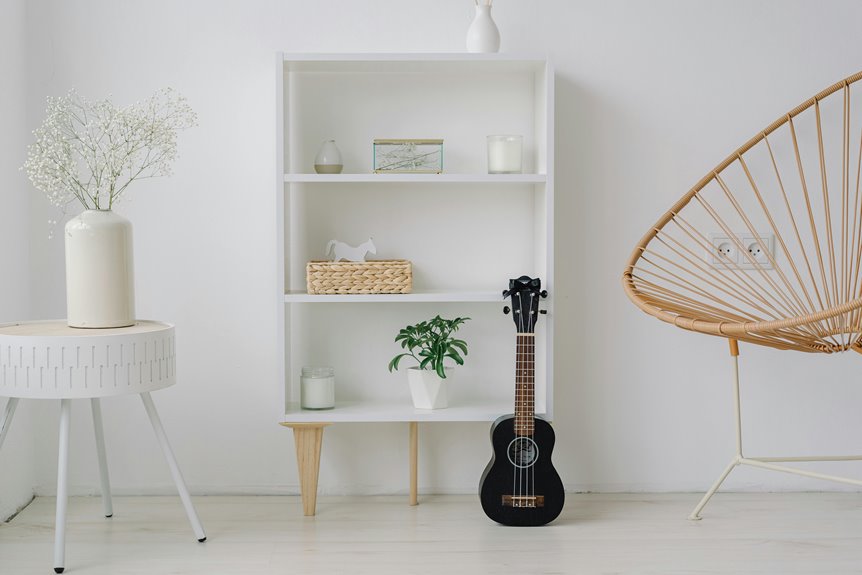
I’ve learned that a cohesive palette unifies everything well. Pick neutral modern pieces—a gray sofa, clean-lined shelving—then add vintage layers that whisper, not shout. Reupholster that inherited chair in a bold, complementary fabric. Suddenly it becomes a focal point instead of clashing confusion.
| Element | Modern Base | Vintage Layer |
|---|---|---|
| Sofa | Straight lines, neutral | Patterned throw pillows |
| Side table | Glass and metal | Ornate wooden accent |
| Wall space | Minimal decor | Curated vintage finds |
Balance matters. Mix straight-lined furniture with a few tufted pieces. This creates visual interest while maintaining breathing room. You’re building a home that honors both past and present—a space that reflects who you are.
Balance Through Strategic Placement
The real work happens when you stop treating vintage finds like furniture and start treating them like art. I’ve learned that strategic placement creates balance in your space. Here’s how:
- Anchor one focal point—a brass floor lamp or mid-century chair—then let it breathe with negative space around it
- Pair bold vintage accents with streamlined contemporary furniture to maintain your modern backbone
- Group items in odd numbers (one lamp, three small frames) rather than spreading them everywhere
- Rotate seasonal pieces to keep your space fresh without losing that balanced foundation
This approach prevents that thrift-store feeling. You’re not cramming vintage everywhere; you’re thoughtfully placing statement pieces where they belong. That’s when a room feels deliberate and distinctly yours.
Mix Curved and Straight-Lined Pieces to Balance Eras
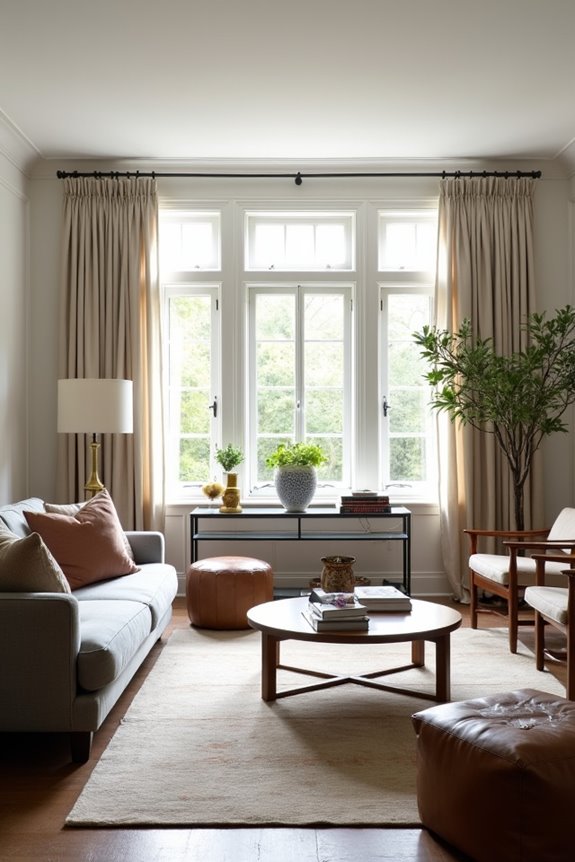
One of my favorite decorating approaches is pairing vintage curved pieces with modern straight-lined furniture. This mix creates visual tension that works well when intentionally planned.
When I choose a focal vintage piece—like a mid-century wingback chair with pronounced curves—I anchor it with a streamlined modern sofa. This balance prevents the space from feeling cluttered or thrift-store chaotic. The straight lines ground the curves effectively.
I repeat this pattern throughout. My curved pendant lamp hangs above a rectangular table. A circular vintage rug sits beneath geometric modern seating. These proportional choices create a cohesive, welcoming arrangement.
The key? Substantial pieces work together. Oversized vintage curves pair best with sturdy, clean-edged bases. This maintains comfort while preserving flow and readability across your entire room.
Reupholster or Restore Vintage for Modern Comfort
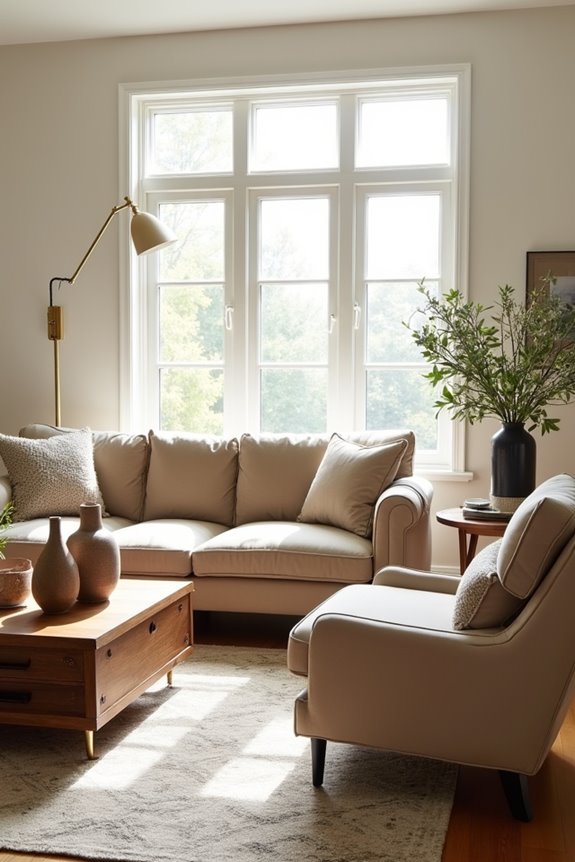
When I find a vintage chair with great bones but worn upholstery, I know it’s worth the investment in quality fabric and professional reupholstery. You’ll want durable materials like performance fabrics or tightly woven textiles, especially if your piece will live in a high-traffic room, because comfort and longevity matter just as much as the new color or pattern you’ve chosen. The best part is seeing how fresh upholstery brings a beloved vintage find into your modern home, bridging the gap between nostalgic style and everyday living.
Investing in Quality Upholstery
How can you transform a $50 thrifted chair into a quality piece that belongs in a designer’s showroom? The answer lies in investing wisely in upholstery. I’ve learned that choosing durable fabric and working with reputable upholsterers produces better results than cutting corners.
Here’s what I prioritize:
- Selecting high-performance fabrics rated for heavy use
- Working with experienced upholsterers who understand vintage seating
- Pairing refurbished bases with modern cushion tops
- Choosing bold colors that fit your modern palette
When you invest in comfortable upholstery with long-lasting wear potential, that vintage chair becomes a lasting piece. Quality reupholstery isn’t just refreshing old furniture—it’s creating heirloom pieces you’ll keep. Your home deserves furnishings that feel as good as they look.
Balancing Vintage Appeal With Function
The real value emerges when you stop choosing between preserving a vintage piece’s character and actually using it comfortably in your modern life. I’ve found that reupholstering affordable vintage furniture—chairs under $100, sofas you find at estate sales—creates durable seating that works both as a timeless option and with current design. The trick is selecting well-made bones, then pairing them with contemporary fabrics in your bright, cohesive color palette. You’re not erasing history; you’re honoring it by making pieces functional. Add modern bases or updated hardware, layer in contemporary textures through rugs and lighting, and your mixed styles become deliberate. This approach to balancing vintage appeal with function in modern homes creates spaces where vintage furniture belongs—not as museum pieces, but as beloved, lived-in parts of your daily life.
Layer Textures and Vintage Lighting for Intentional Style
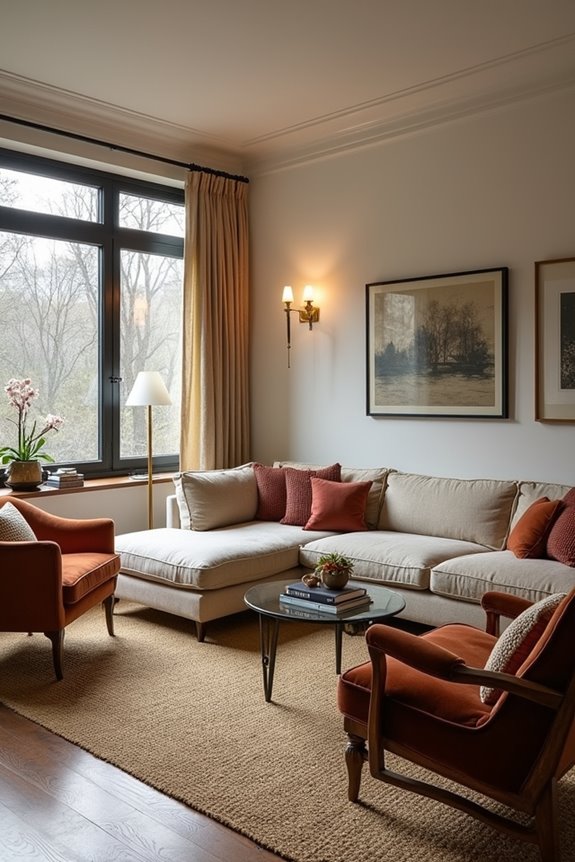
Why do some rooms feel alive and others fall flat? It’s all about layering. When you blend vintage lighting and textures thoughtfully, you create spaces that invite people in.
Here’s what works with mixed styles:
- Anchor rooms with vintage lighting—swap in antique lamps or chandeliers alongside contemporary seating
- Layer textures by pairing tufted vintage upholstery with straight-lined modern furniture for balance
- Incorporate natural materials like leather, wool, linen, and faux fur for contrast
- Hang antique suzanis or tapestries as textile textures that reinforce your design choices
Use the 80/20 principle: roughly 20% vintage lighting and textiles, 80% modern finishes. This prevents visual overload while keeping your modern homes distinctive. The result? Layered decor that doesn’t overwhelm—it welcomes.
Stick to Vintage That Actually Functions (Beds, Sofas, Dressers)
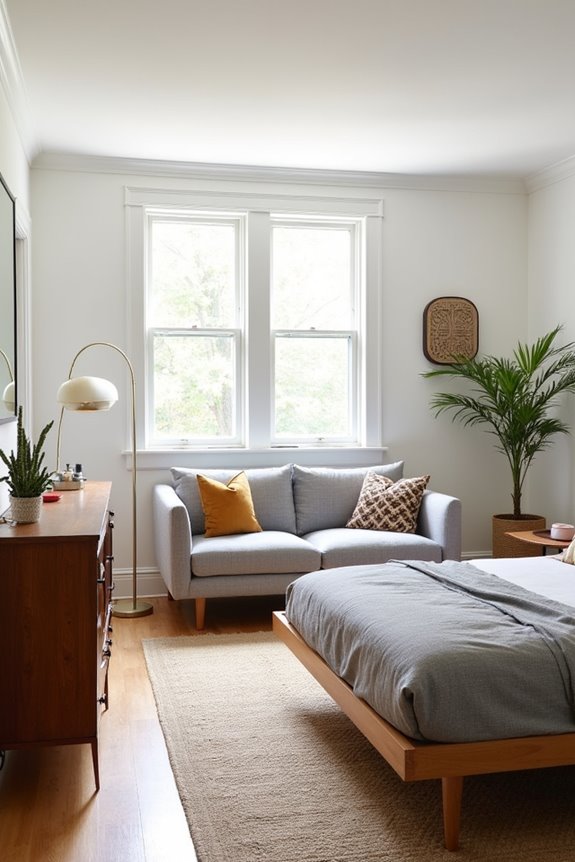
Once you’ve layered in that lighting and texture, it’s time to get real about what you’re actually sitting on and sleeping in. I learned this the hard way—vintage furniture looks gorgeous until you’re stuck with a sagging sofa or a dresser with jammed drawers.
Focus on pieces with proven durability. Mid-century beds and sofas built with solid construction warrant your attention, though expect to invest in modern upgrades like new mattress supports or contemporary frames paired with vintage headboards. For dressers, seek reliable hardware or swap in newer components entirely.
Don’t sacrifice comfort for vintage appeal. A $3k sofa needing upholstery isn’t practical. Instead, pair vintage bases with modern tops, refresh functionality through strategic upgrades, and you’ll create spaces where you actually want to live—not just photograph.
Curate Ruthlessly: Let Pieces Breathe
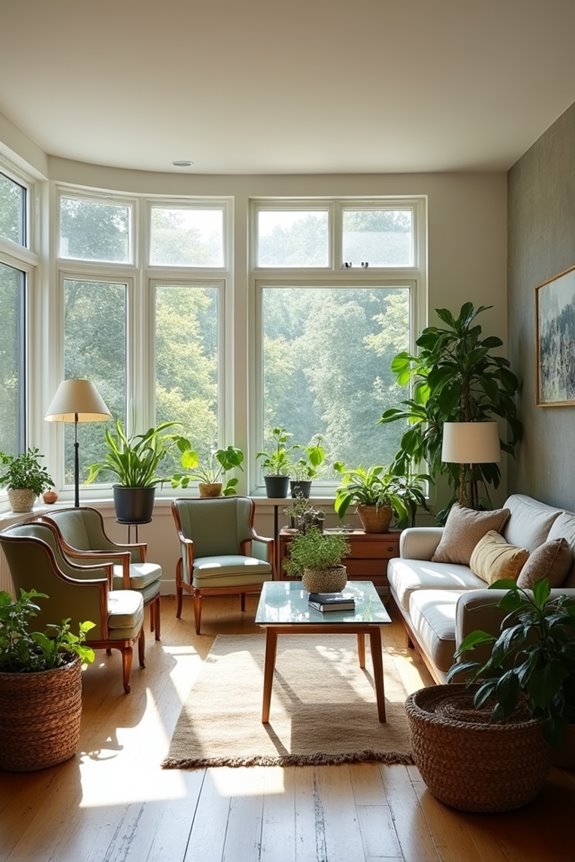
How many vintage pieces can you fit into one room before it stops feeling curated and starts feeling cluttered?
I’ve learned that curate ruthlessly means giving each vintage piece room to breathe. You’re not filling every corner—you’re creating deliberate spaces. Here’s what I do:
- Choose 3–5 standout focal antiques per room, like an ornate mirror or mid-century dresser
- Balance vintage with modern furniture to prevent overwhelming the space
- Use a cohesive palette so bold vintage colors harmonize rather than clash
- Leave breathing room between pieces so they feel placed with purpose, not crammed
This approach keeps your home feeling organized rather than cluttered. I reassess seasonally, removing anything that no longer serves the design. When vintage pieces have space around them, they command attention. That’s when your décor works well.